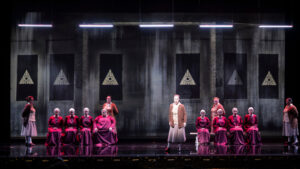
Opera, Pop Culture, and Why The Handmaid’s Tale Already Has a Fandom
By Austin T. Richey, Ph. D.
Digital Media Manager and Storyteller, Detroit Opera
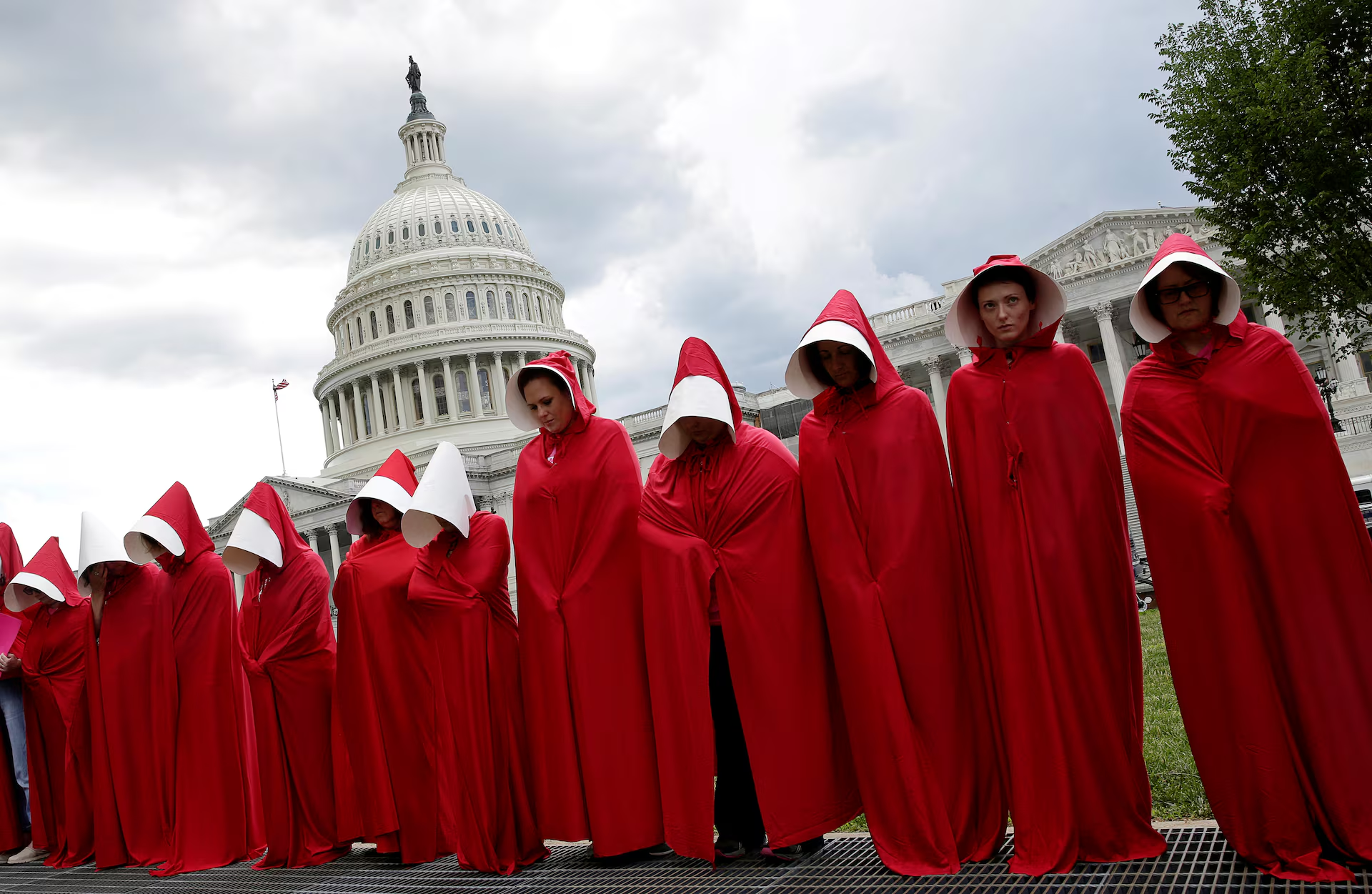
Long before a single note of The Handmaid’s Tale is heard in the opera house, most audience members already know exactly what Gilead looks like. They’ve seen the red cloaks and white bonnets on television, in memes, on Halloween streets, and—most strikingly—at protests around the world. The visual language Margaret Atwood created in 1985 has traveled far beyond literature. It has become a cultural shorthand for conversations about gender, power, bodily autonomy, and state control.
That’s rare territory for opera.
Most operas spend decades, sometimes centuries, trying to seep into popular consciousness. Their stories are learned slowly. Their images become iconic over time.
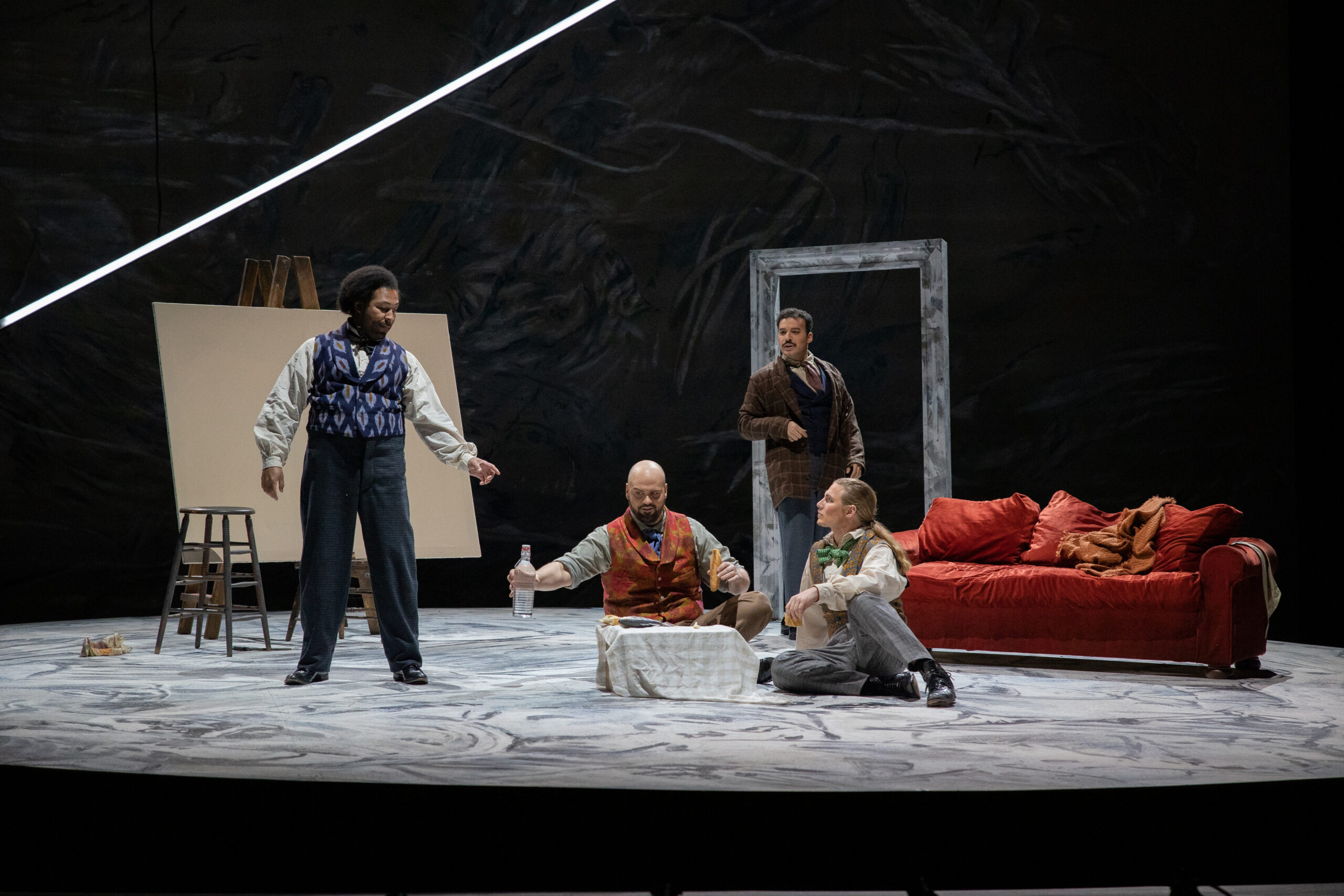
Think of how long it took for the Parisian garret of La bohème to become a universal symbol of youthful artistic poverty, or for the image of Tosca standing over Scarpia’s body to register as shorthand for political vengeance. These works had to teach audiences how to see them. Their symbolism was built through repetition across generations of productions, recordings, and cultural references.
The Handmaid’s Tale arrives on the operatic stage already fluent in pop culture. Audiences don’t need a synopsis to understand the stakes. They walk in with an emotional and political vocabulary already activated.
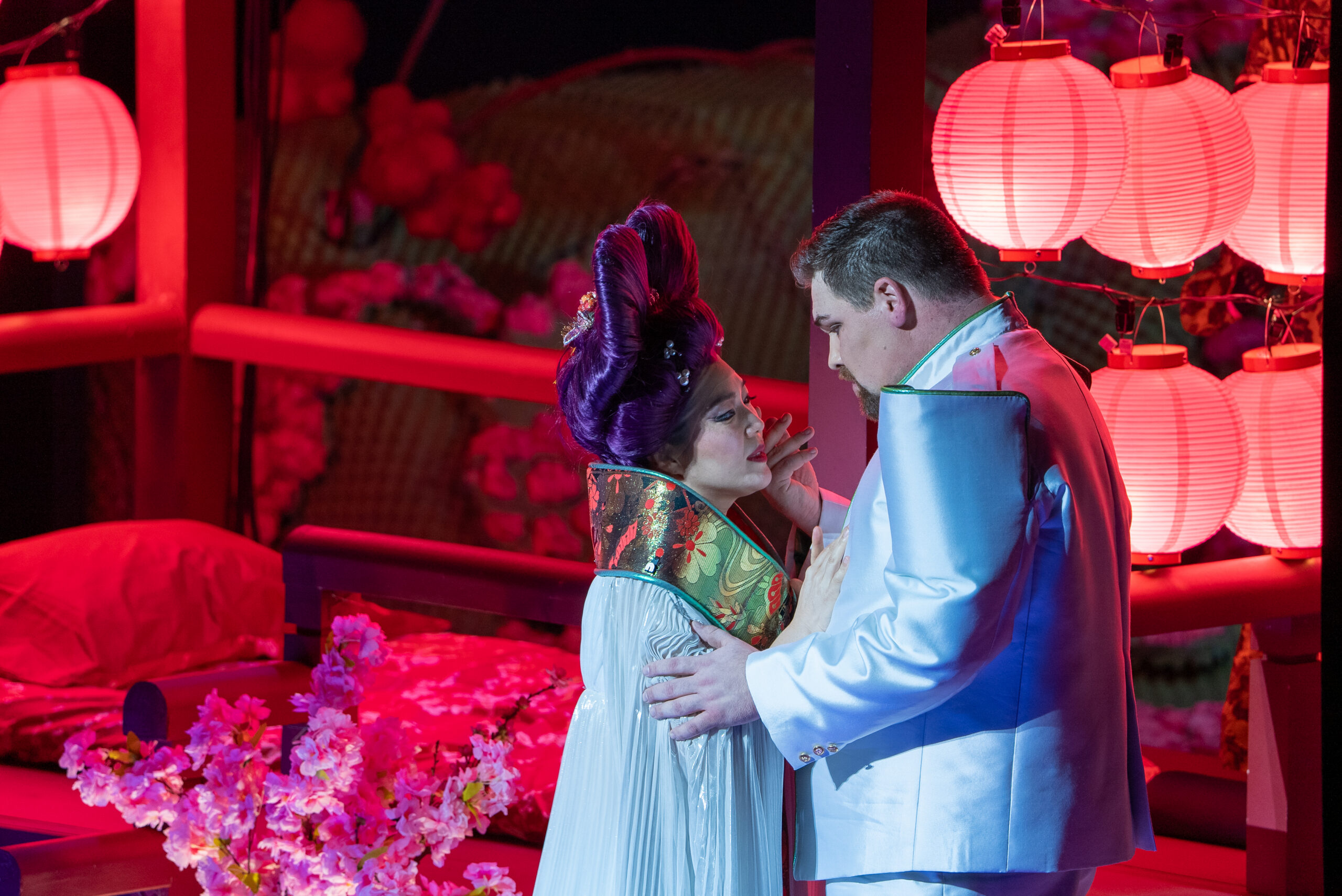
In many operas, the audience discovers the world as it unfolds. We learn, scene by scene, what kind of society we are in. In Rigoletto, we gradually understand the cruelty of the Duke’s court. In Madama Butterfly, we slowly realize the full extent of Pinkerton’s moral vacancy. In The Handmaid’s Tale, the audience already knows the rules of Gilead before the overture begins. The tension is not in discovering the world, but in watching how music transforms a world already recognized.
That familiarity creates a fascinating dramatic inversion: we recognize the red cloak instantly, but we’ve never heard it sung before. We know Gilead visually, but we’ve never felt it through an orchestra vibrating in the room.
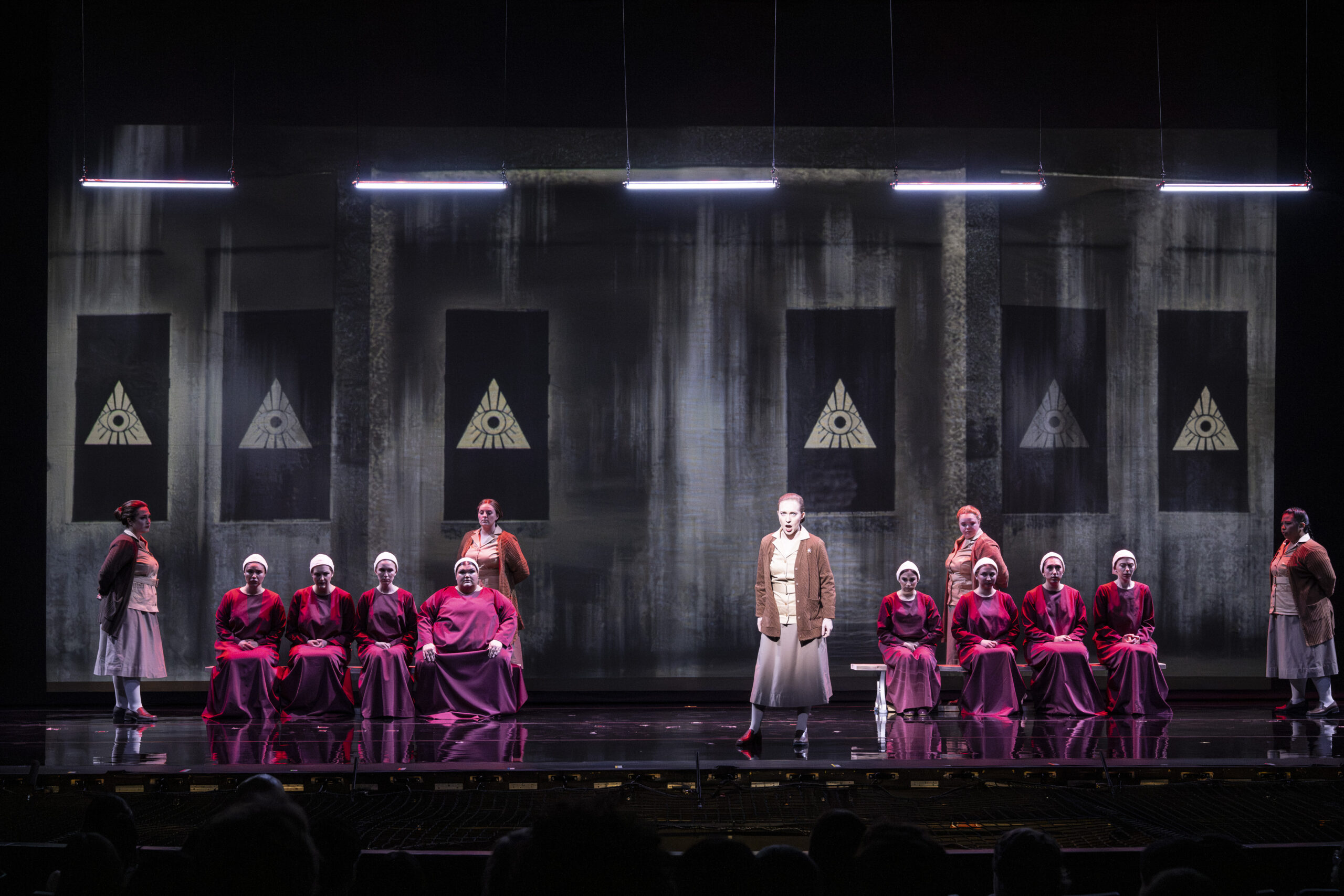
Opera thrives on scale—big emotions, big sound, big physical presence. Historically, it has been the medium through which societies processed their anxieties about power. Fidelio wrestled with unjust imprisonment and political tyranny. Tosca staged the suffocating surveillance state of Napoleonic Rome. Boris Godunov exposed the fragility of autocratic rule. Opera has always been a place where political dread becomes audible.
What is unusual here is the direction of travel. In those earlier works, opera introduced audiences to these political worlds. With The Handmaid’s Tale, audiences arrive already thinking about these issues because they’ve seen them debated in real time across news cycles, social media, and public demonstrations. This flips the historical pattern. Opera is no longer the origin point of the imagery—it becomes the amplifier.
We’ve seen something like this before. When Nixon in China premiered, audiences already knew the historical event. The opera didn’t need to explain who Nixon or Mao were; instead, it explored the theatricality, the absurdity, and the myth-making of politics through music. Similarly, Dead Man Walking brought a widely read memoir into operatic form, allowing audiences to focus less on “what happens” and more on the moral and emotional dimensions of how it happens.
The Handmaid’s Tale operates in that lineage, but with an even deeper layer of recognition. Its imagery is not just historical—it’s participatory. The red cloak has been worn by protestors. It has entered civic life as performance. In a sense, the story has already had thousands of unofficial stagings in streets around the world before it ever reached the opera stage.
Opera, as an art form, understands the power of costume and silhouette better than almost any medium. Think of the instantly recognizable horns of Brünnhilde, the masked ball in Don Giovanni, or the geisha costume of Cio-Cio-San. These visuals took decades to become culturally legible. The Handmaid’s uniform achieved that status in less than a generation. When that image enters the opera house, it carries with it all the protest, debate, satire, and cultural weight it has accumulated outside of it.
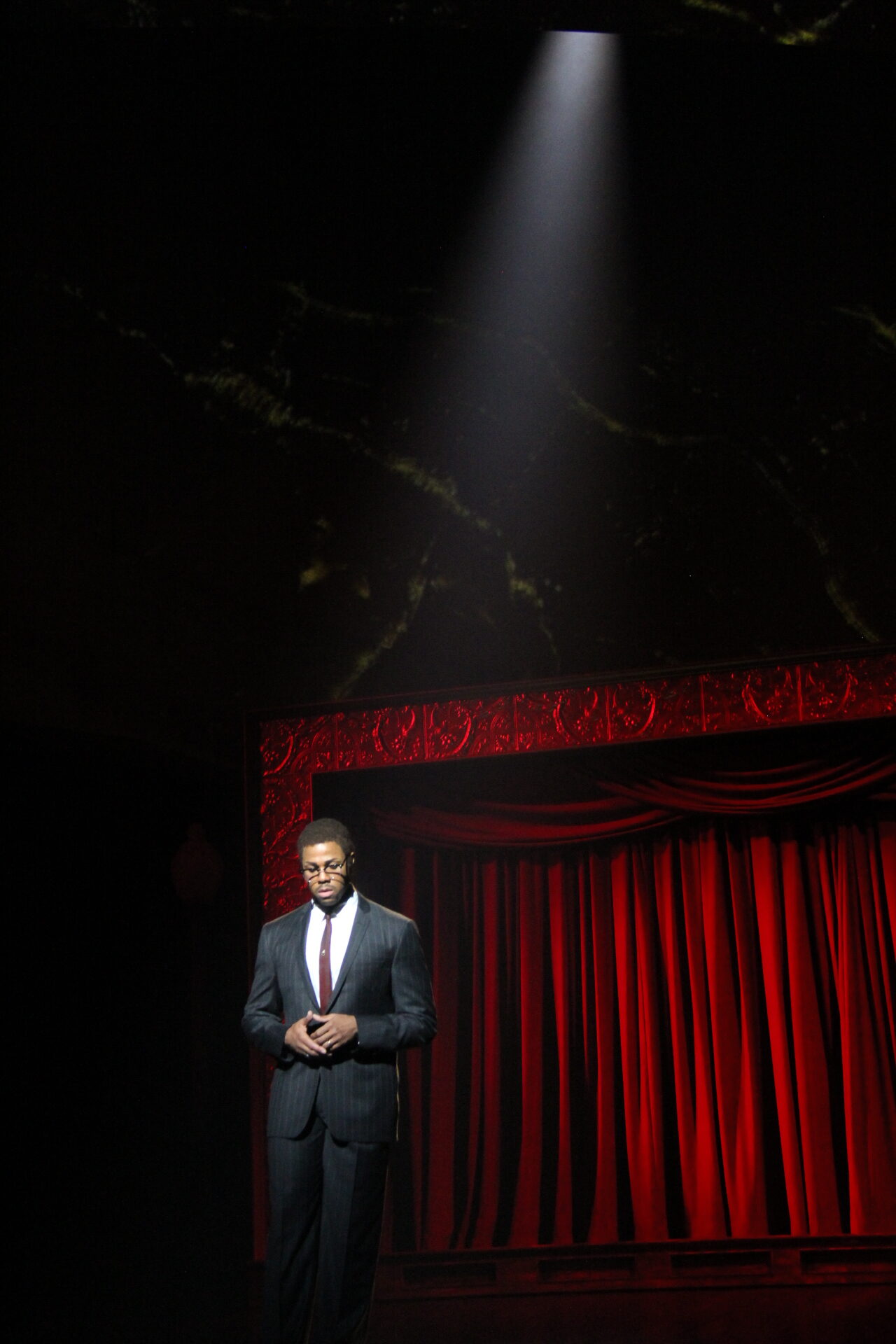
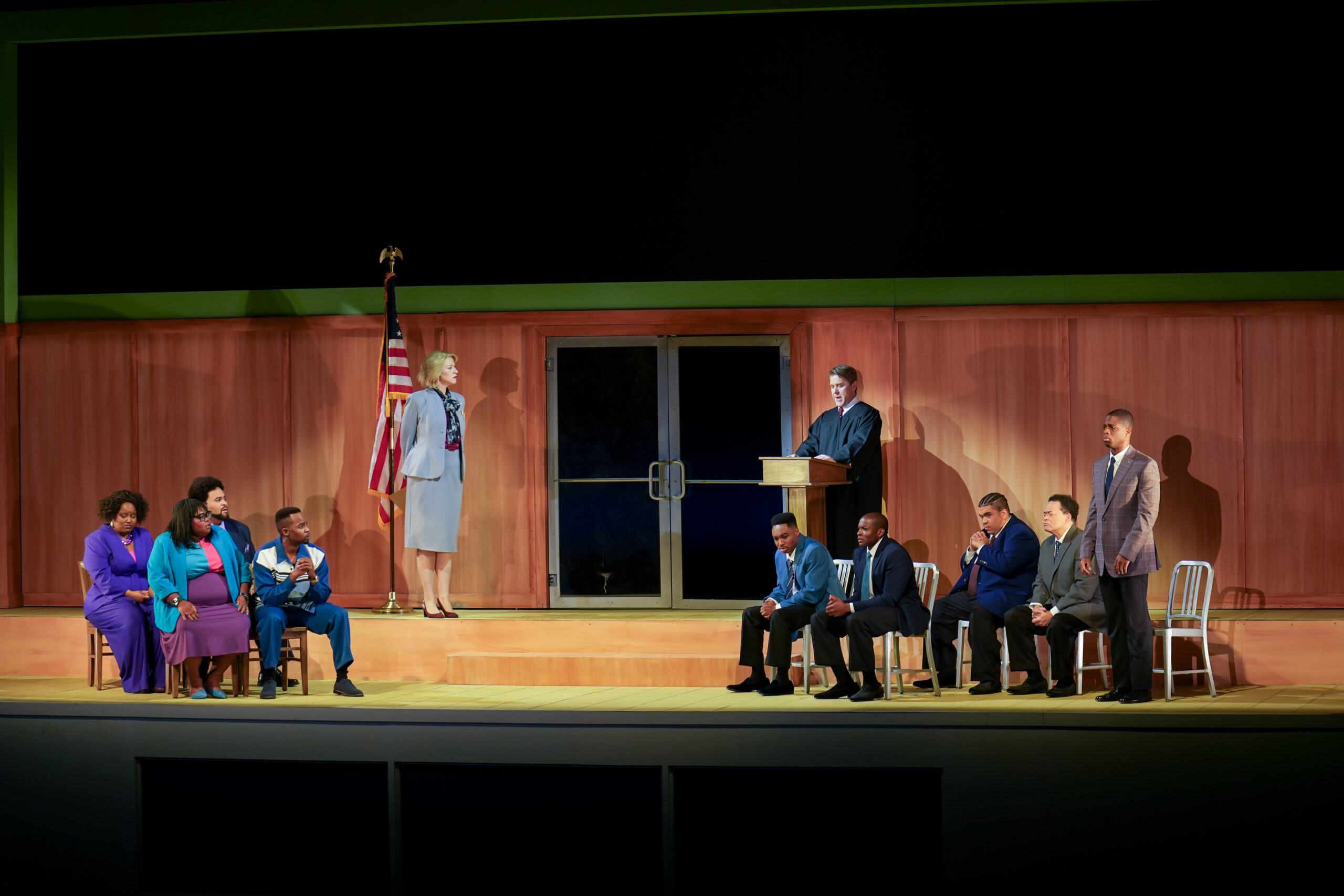
Detroit Opera has already explored this territory in recent seasons. When audiences attended X: The Life and Times of Malcolm X and The Central Park Five, they did not arrive as blank slates encountering an unfamiliar narrative. They came in carrying decades of history, news footage, documentaries, classroom lessons, and lived experience. They knew Malcolm’s face. They knew the injustice suffered by the five teenagers in Central Park. The operas did not need to explain who these people were. Instead, they allowed audiences to experience these histories in a new dimension—through breath, orchestration, and the emotional scale only opera can provide.
In both cases, recognition preceded the music. The power of those productions came from watching how opera reframed stories that audiences thought they already understood. Malcolm X was no longer a figure in a textbook; he was a living, singing presence in the room. The young men of the Central Park Five were no longer archival images; they were embodied voices whose suffering and humanity filled the theater.
This is where opera does something uniquely powerful. It takes a story people think they know and reintroduces it through breath, bodies, and sound. The audience isn’t just watching a familiar narrative—they’re feeling it resonate physically in their chest. The orchestra doesn’t illustrate Gilead; it immerses the listener in it.
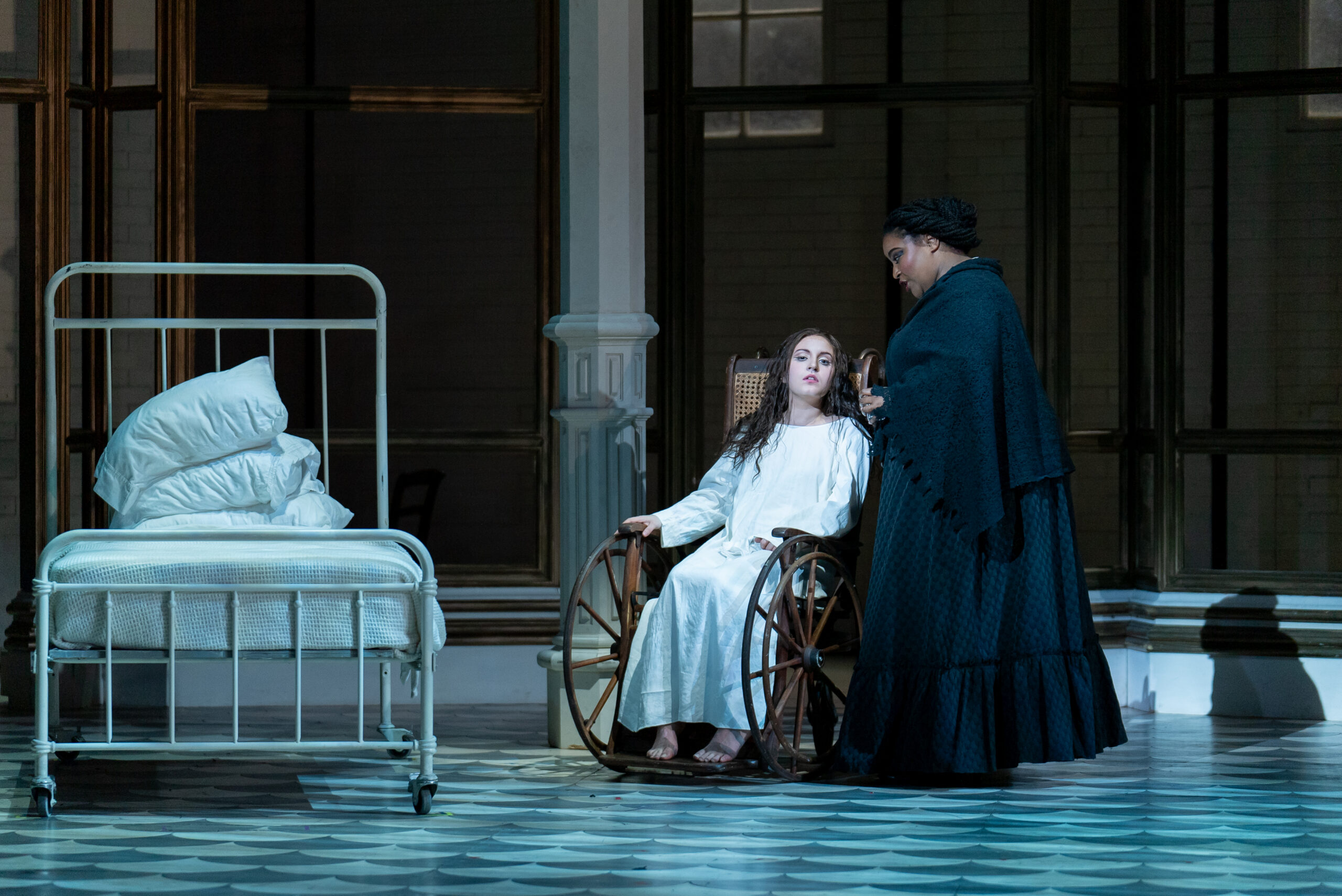
Historically, opera has been where private suffering becomes public spectacle. Violetta’s illness, Cavaradossi’s execution, Butterfly’s abandonment—these personal tragedies are expanded into communal experiences through music. Offred’s interior monologue, which is intimate and psychological on the page, becomes outward, audible, and shared in performance. What was once internal narration becomes sung resistance.
For longtime opera audiences, this is also an unusual experience. They are accustomed to works whose historical distance creates a kind of safety. It is easier to process tyranny when it is framed as Napoleonic Rome or Tsarist Russia. The Handmaid’s Tale offers no such buffer. Its world feels uncomfortably adjacent to our own.
For newcomers, this may be the first opera they attend precisely because they already love the story. They are not entering an unfamiliar cultural space—they are watching a familiar one transformed. That lowers the barrier to entry in a way few operas can. Instead of teaching audiences what to see, this production asks them to reconsider what they already think they understand—through music, through voice, and through the collective experience of sitting in a room where Gilead is not just seen, but heard, felt, and shared.
Related Posts

25/26 Season Pre-Opera Talks
Detroit Opera offers complimentary opera and dance talks one hour prior to each performance. Noted experts provide background and important information on what you will see on stage, enhancing your performance experience! Opera Talks and Dance Talks provide an insightful and entertaining preview of the works performed on stage. Unless otherwise directed, Talks take place...
learn More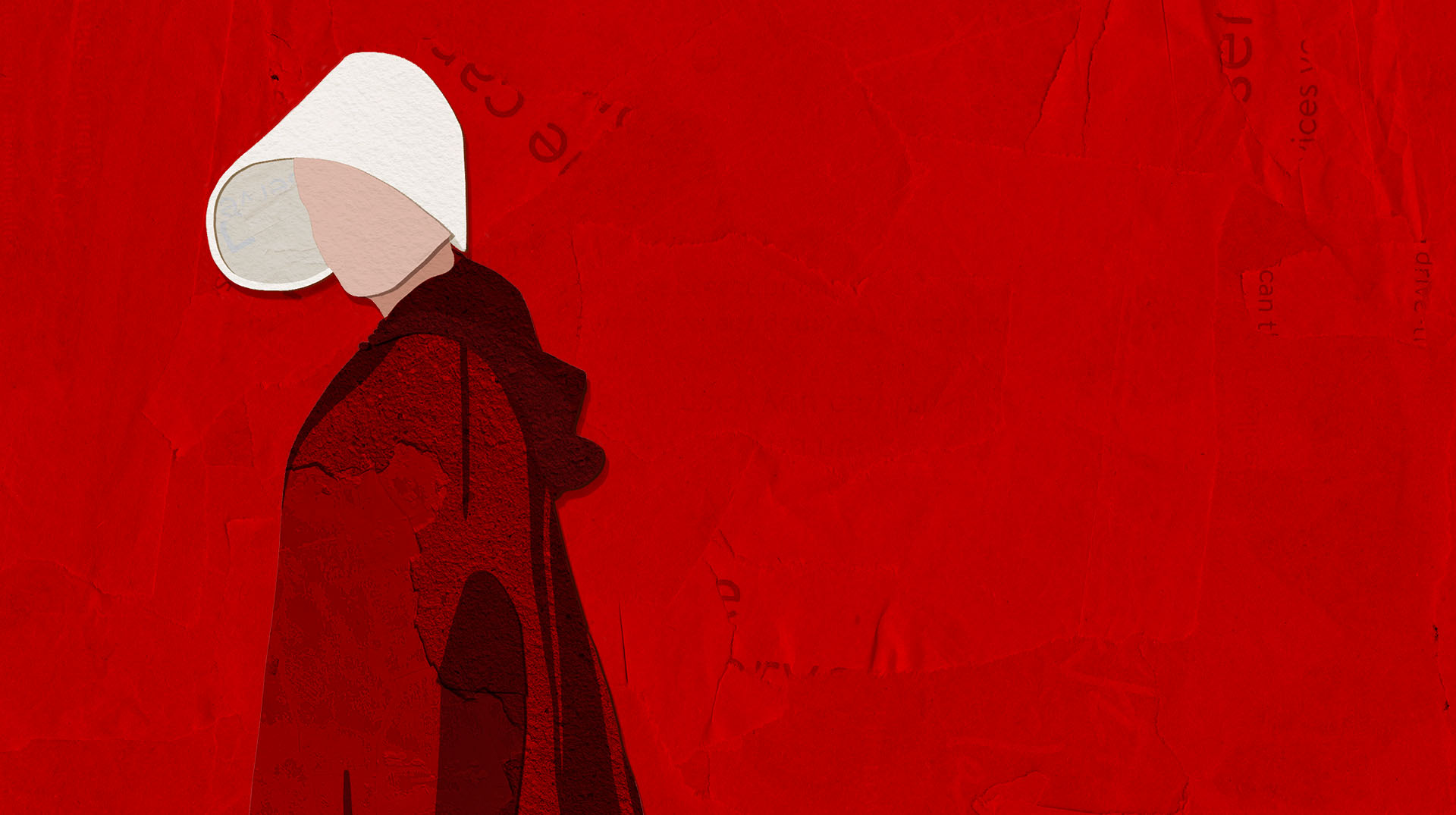
Free Community Events - The Handmaid's Tale
Join Detroit Opera for a series of free community events leading up to The Handmaid’s Tale. Moderated discussions with local experts will explore key themes from the opera — including female disempowerment, reproductive rights, and control—examining how patriarchal systems use religious extremism and political power to oppress women, as well as themes of survival, memory,...
learn More
Read our 25/26 Season Brochure!
Our 25/26 Season Brochure has dropped! Journey along with Detroit Opera and Dance @ Detroit Opera as we celebrate America’s semiquincentennial, and what it means to be American, through opera and dance. By becoming a subscriber, you’ll experience a symphony of movement and voice in honor of 250 years of America’s spirit as well as...
learn More