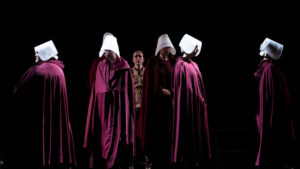
When Dystopia Stops Feeling Like Fiction: Opera as a Mirror of the Present
Opera has never shied away from tyrants.
By Austin T. Richey, Ph. D.
Digital Media Manager and Storyteller, Detroit Opera
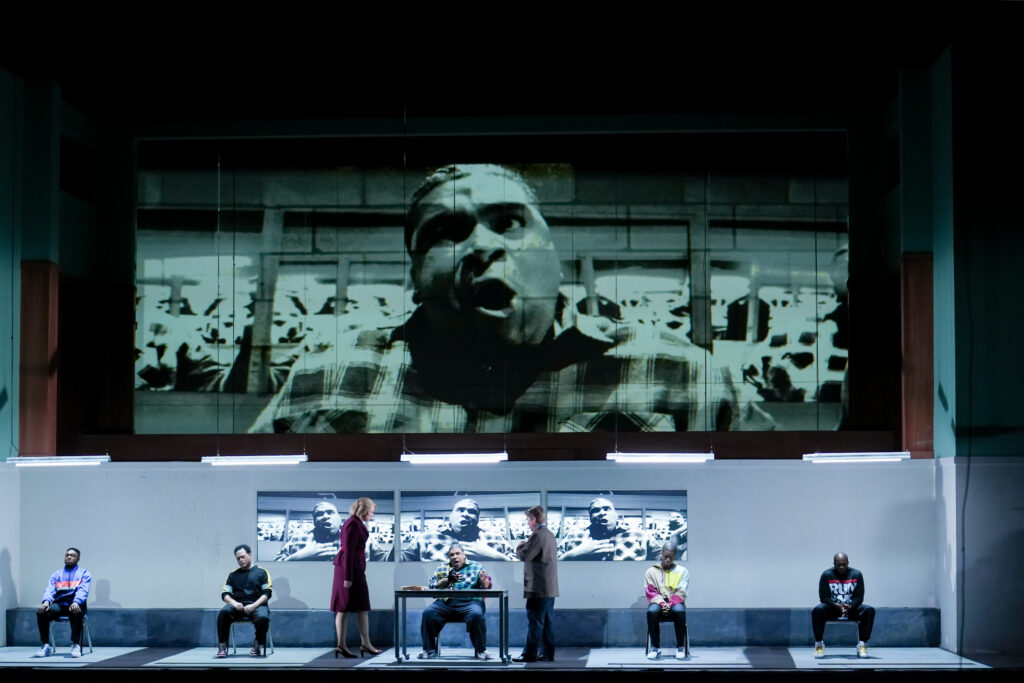
Across centuries of repertoire, power appears not as an abstract idea but as a lived force—embodied in rulers, police, priests, and crowds; enforced through law, ritual, and spectacle. Kings who abuse authority, societies built on control, systems that crush individuals—these themes recur so reliably that they can start to feel “operatic” in the casual sense: heightened, grand, safely historical, with the distance of myth, monarchy, or wartime past, so that we don’t always feel them pressing on the present.
The Handmaid’s Tale removes that buffer.
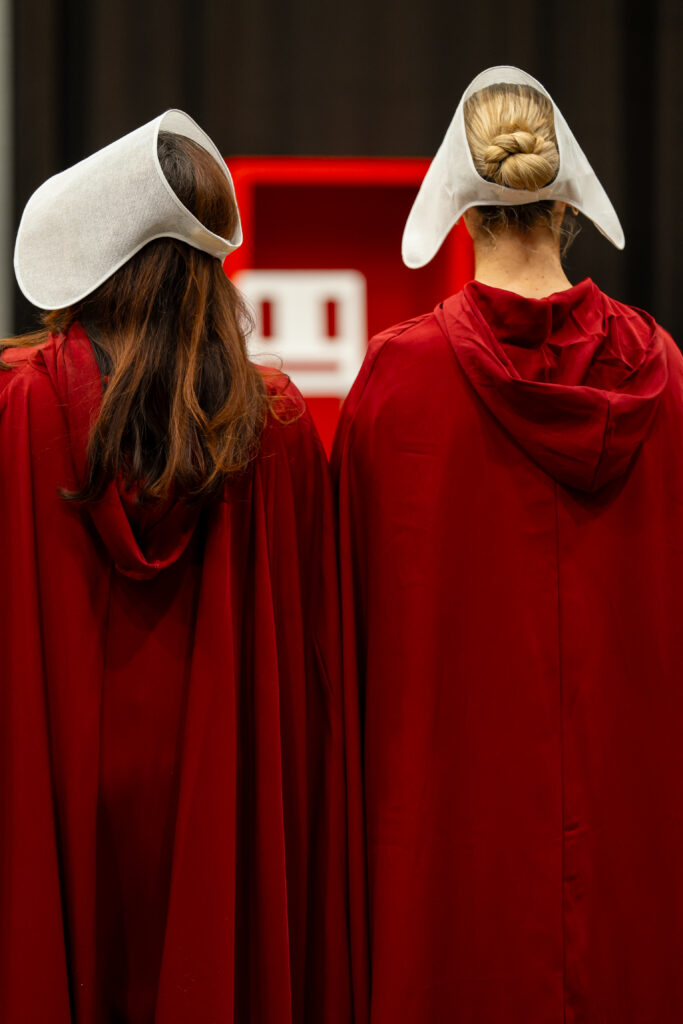
Gilead doesn’t register as ancient history or fantasy. It feels uncomfortably close. That proximity changes how authoritarianism lands in the opera house. You aren’t merely watching a cautionary story from another era; you are watching a system whose logic—surveillance, public performance of obedience, the policing of bodies, the reduction of identity to function—has obvious echoes in contemporary life.
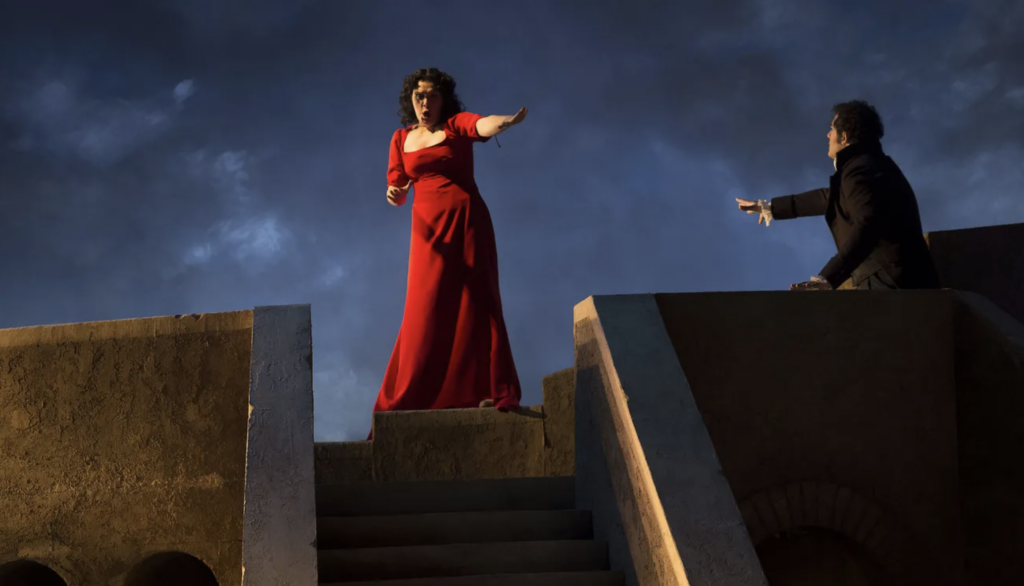
In opera, consider how frequently the stage is a laboratory for coercion. In Puccini’s Tosca (1900), state violence is intimate and theatrical. Scarpia doesn’t merely wield authority—he stages it. Interrogation becomes a performance with music as its pressure system: the offstage torture of Cavaradossi is “heard” through Tosca’s reactions, and the room itself feels like an instrument being tightened. What makes Act II so unnerving is how quickly the private becomes political. Desire is not separate from governance; it is one of its tools. Scarpia’s power lies in his ability to turn the mechanisms of the state into a personal weapon, and to insist—calmly, bureaucratically—that this is simply how the world works.
Beethoven’s Fidelio (1805) approaches tyranny from the inside of a prison. Florestan’s imprisonment is not a singular tragedy but a symptom of a system designed to bury inconvenient people. The dungeon is not “elsewhere”; it is part of the state’s floor plan. Even the opera’s famous affirmations of hope gain their force because Beethoven makes us wait for them—through darkness, deprivation, and the sickening normalcy of the jailer’s routines. When the prisoners briefly emerge into daylight in the chorus, the moment is not triumphal escapism; it’s a tiny, fragile opening. The human need for air becomes a political condition.
And then there is Verdi, who repeatedly exposes how power maintains itself through public ritual. In Don Carlo (1886), set during the height of the Spanish Empire, court ceremony and religious authority braid together until governance becomes a sacred performance. The large-scale scenes—processions, assemblies, public judgment—are not just pageantry; they show how a state trains the public to witness cruelty as order. The point isn’t that individuals are simply “bad,” but that institutions create roles for everyone: the ruler, the priest, the loyal subject, the silent observer. The terror is structural, and Verdi makes the structure audible.
Celebrating Nero’s Corruption(s)
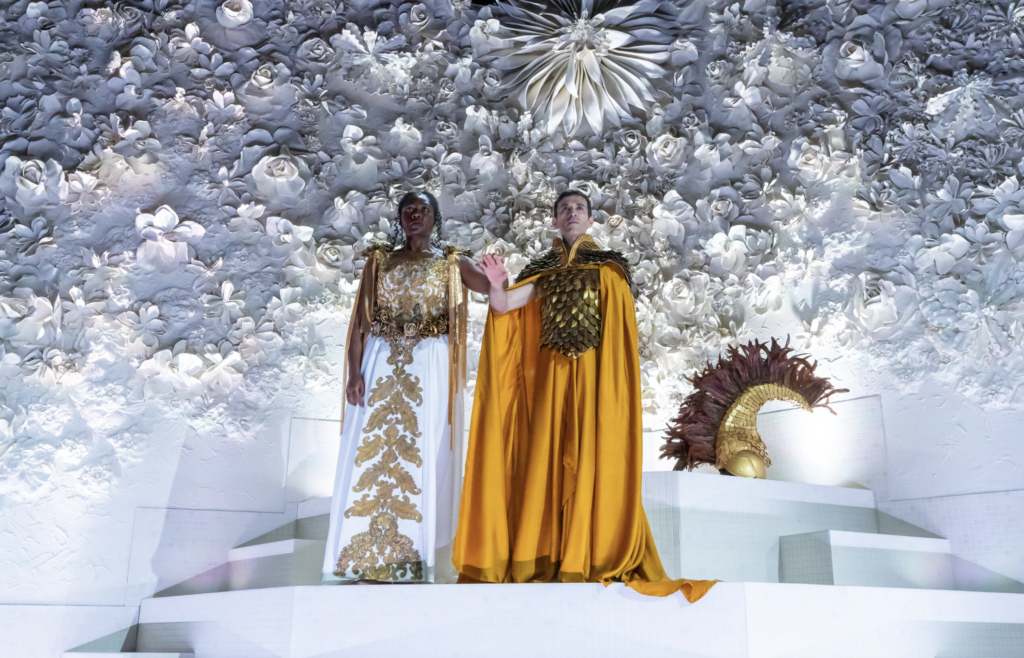
It can be tempting to think of dystopia as a modern genre: gray uniforms, surveillance architecture, laws written on screens. But one of opera’s earliest masterpieces— Monteverdi’s L’incoronazione di Poppea (The Coronation of Poppea)— already offers something chillingly contemporary: a world where truth has no inherent protection, virtue has no guaranteed reward, and power advances through desire, narrative control, and public image.
L’incoronazione di Poppea (1643) is set in imperial Rome, but it refuses the moral accounting we often expect from tragedy. Nero is an emperor who behaves like a law unto himself; the court is a machine of flattery, gossip, and strategic silence; and the opera’s central romance is not the redemption of love—it is love as an instrument of rule. Poppea’s ascent depends on pushing aside anyone who complicates the storyline of power: the lawful wife (Ottavia) becomes disposable, the philosopher (Seneca) becomes an obstacle to be removed, and even loyalty is valued only insofar as it can be used.
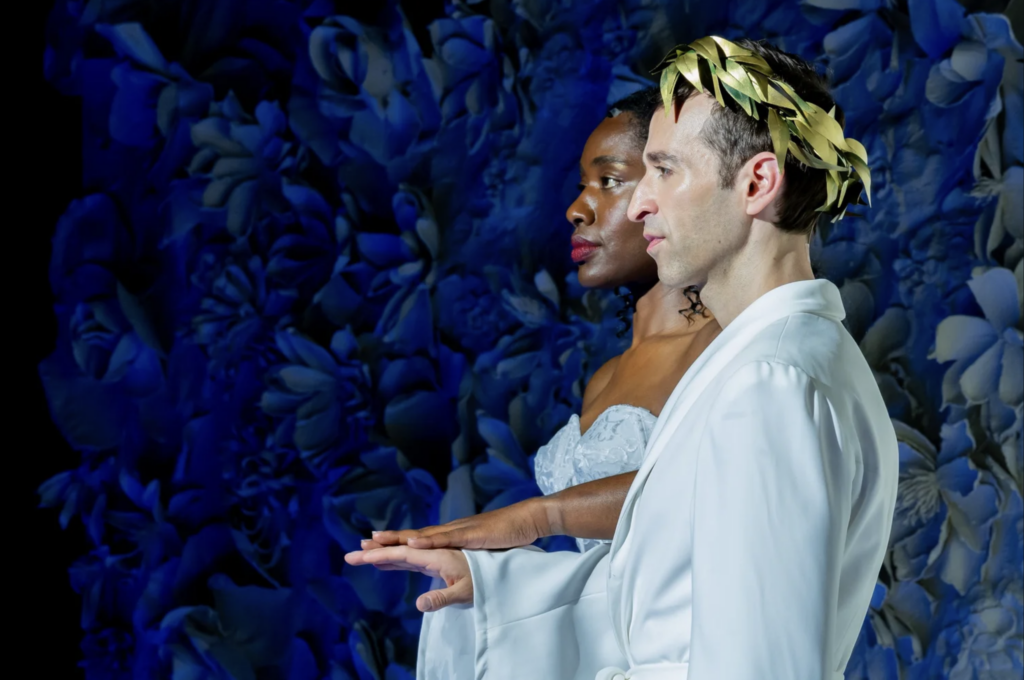
What makes Poppea feel relevant is not simply that it depicts corruption. It depicts corruption that works. The opera’s politics are not a cautionary tale in which justice eventually arrives to restore balance. Instead, it shows a system that can absorb cruelty and call it destiny. Ottavia’s banishment is particularly stark in this regard: the state doesn’t need to execute her to erase her. It simply rewrites her place in the story. That erasure—making someone socially nonexistent—rhymes uncomfortably well with modern authoritarian tactics that rely on administrative violence: stripping rights, stripping names, stripping the ability to belong.
The opera is also brutally clear about the role of aesthetics in domination. Monteverdi gives extraordinary music to morally compromised scenes, reminding us that beauty is not proof of goodness. The famous closing duet, “Pur ti miro,” is often staged as rapturous fulfillment—two lovers finally united. But in the dramatic context, it is also a victory song for an order built on coercion and removal. In other words, Poppea stages one of the most unsettling possibilities opera can offer: a world where the soundtrack of triumph belongs to the people who most effectively consolidate power.
Enabling the Tyrant
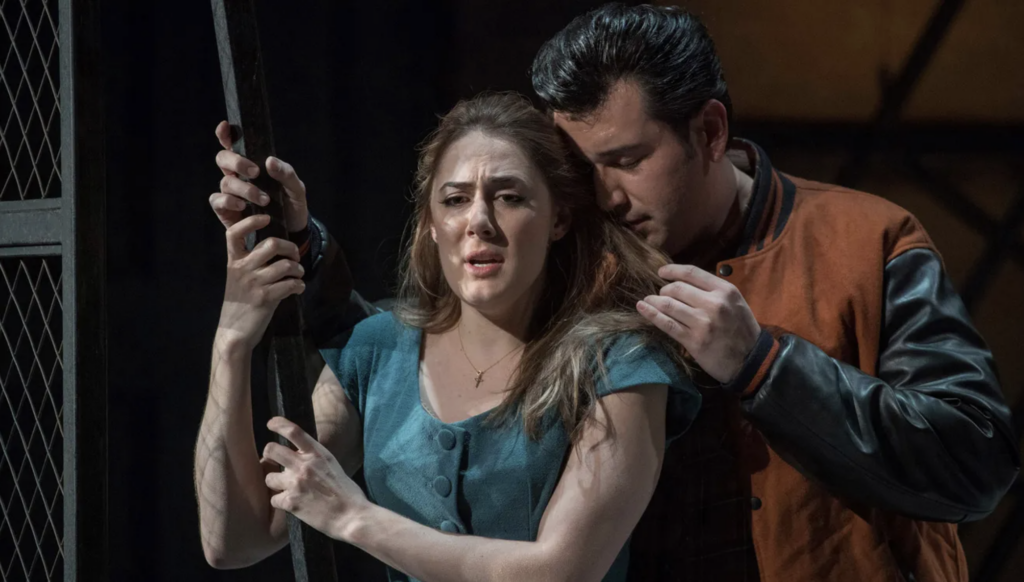
Authoritarian systems don’t run on one villain alone. Opera, at its best, is honest about the ecology of power: the aides, the courtiers, the bureaucrats, the neighbors, and the crowd that learns how to live around fear. In Rigoletto (1851), the Duke’s violence is enabled by a whole social world that treats cruelty as entertainment. The courtiers’ kidnapping of Gilda is carried out with the casual glee of people for whom other lives are props. Verdi forces us to watch how power reproduces itself through laughter, through “boys will be boys” camaraderie, through collective indifference. The tragedy is not only the Duke’s predation; it’s the ease with which the court participates.
Mozart offers a different angle on complicity: systems that appear civilized precisely because they are disciplined in their self-presentation. Le nozze di Figaro (1786) is often celebrated as comedy, but it’s also an anatomy of institutional entitlement. The Count’s expectation of access—his sense that hierarchy grants him rights over other people’s bodies and futures—doesn’t require a police force. It requires a social agreement, a grammar of deference. The opera’s brilliance is that characters survive by reading the room, manipulating the script, and refusing to accept the Count’s authority as “natural.” It’s a reminder that power is often sustained not only through overt violence, but through the unspoken assumption that some people are entitled to take what they want.
And in Don Giovanni (1787), Mozart takes the mask off. Don Giovanni’s violence is relentless, but what makes the opera sting is how many people orbit him—excusing, accommodating, rationalizing. Leporello’s famous catalog aria is not just comic; it’s a ledger of exploitation turned into a joke for survival. Donna Anna and Donna Elvira expose different responses to trauma and social pressure: one pushed toward vengeance, one trapped between reality and emotional attachment. The opera asks a devastating question: how long can a community tolerate a predator before the predator becomes part of the community’s structure?
Modernity, Pressure, and the State as Machine
In the twentieth-century, Berg’s Wozzeck (1925) shows a man crushed not by a single tyrant but by institutions stacked on institutions: military hierarchy, scientific exploitation, poverty, and public humiliation. The Captain and the Doctor are not “leaders” of a regime, but their petty authority becomes lethal because the system backs them. Wozzeck is watched, evaluated, experimented on—treated as material. The horror is not only psychological; it is economic and administrative. He is denied the conditions needed to remain human.
Shostakovich’s Lady Macbeth of the Mtsensk District (1934) pushes this further into social critique, showing how violence and desire erupt in a world where women are treated as property and boredom becomes a kind of imprisonment. Even before the plot escalates, the opera paints a suffocating environment: surveillance inside the home, control inside the workplace, weaponized morality, sexuality as both escape and trap. It’s a reminder that authoritarianism isn’t always uniforms and slogans; sometimes it’s a social order that makes people disposable long before the state ever announces itself. The opera was famously attacked in the Soviet newspaper Pravda as a “muddle instead of music” in 1936, signaling a political shift, as Stalin’s Great Terror of 1936–38 began.
Confronting Dystopia in the Opera House
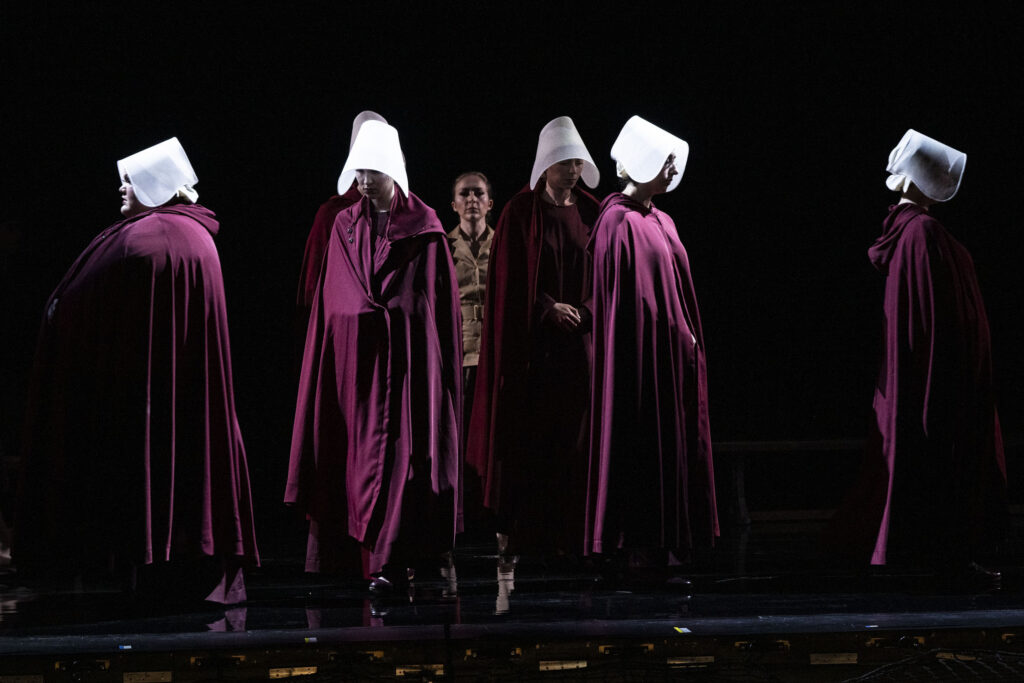
In a theater, there is no pause button, no screen, no editing. You share air with the characters living under surveillance, control, and rigid hierarchy. The stillness of a stage picture, the distance between bodies, the way a performer is watched rather than allowed to move freely—these are not abstract metaphors. They are physical facts in the room. Opera can make oppression spatial: who stands elevated, who is hemmed in, who must remain visible, who is denied privacy. Design and blocking become arguments you feel in your nervous system.
Opera, with its combination of music, movement, and design, becomes a kind of immersive mirror. The audience is not just observing a dystopian society; it is witnessing how it operates in real time—how rules are enforced, how language is controlled, how people internalize fear. The form is uniquely suited to depicting the tension between inner life and outward compliance. Many canonical protagonists survive by splitting themselves in two: the public self that performs safety, and the private self that holds memory, desire, and refusal. You can hear that split in the repertoire—from the weaponized politeness of characters navigating court power in Mozart, to the fractured humanity of Berg’s Wozzeck, where poverty and authority compress a person until even tenderness feels impossible to sustain.
That is why the opera house becomes, here, less a site of escapism than a site of confrontation.
And yet, that confrontation is precisely what makes the experience meaningful. Opera shows not only domination but also what persists inside it: memory, intimacy, moral imagination, the stubbornness of the human voice. Even in the darkest corners of opera—prisons, rulers’ courts, occupied cities—characters search for slivers of agency, sometimes through open rebellion and sometimes through the quieter labor of staying human.
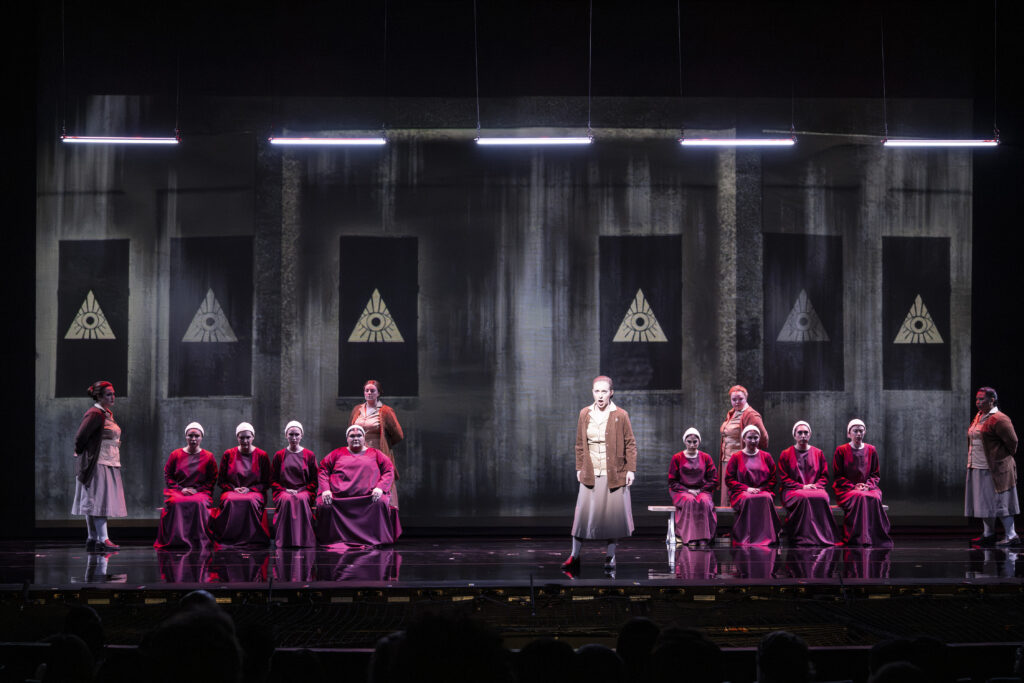
By staging a world that feels recognizable, The Handmaid’s Tale asks the audience to reflect not only on the story, but on the present moment. It turns opera into a lens for examining how power works, how people adapt to oppressive systems, how ideology infiltrates daily life—and how individuals, even when constrained, continue to search for dignity and connection.
Dystopia, in this context, stops being fiction. It becomes a reflection.
RELATED POSTS
Free Community Events - The Handmaid's Tale
Join Detroit Opera for a series of free community events leading up to The Handmaid’s Tale. Moderated discussions with local experts will explore key themes from the opera — including female disempowerment, reproductive rights, and control—examining how patriarchal systems use religious extremism and political power to oppress women, as well as themes of survival, memory,...
learn More
Opera, Pop Culture, and Why The Handmaid’s Tale Already Has a Fandom
Opera, Pop Culture, and Why The Handmaid’s Tale Already Has a Fandom By Austin T. Richey, Ph. D. Digital Media Manager and Storyteller, Detroit Opera Women dressed in red gowns protest outside the Department of Homeland Security Cybersecurity Summit in Manhattan, New York, July 31, 2018. Shannon Stapleton / Reuters. Long before a single note of The Handmaid’s Tale is...
learn More
What is American Opera?
What Is American Opera, Anyway? From the earliest stages in colonial America to today’s multimedia productions, the art form of opera has constantly adapted to the cultural moment, often reflecting America’s own contradictions. Davóne Tines as Malcolm X in Detroit Opera’s 2022 production of Anthony Davis’ X: The Life and Times of Malcolm X....
learn More