A Timeline of the Detroit Opera House
By Austin T. Richey, Ph. D.
Digital Media Manager and Storyteller, Detroit Opera
1896
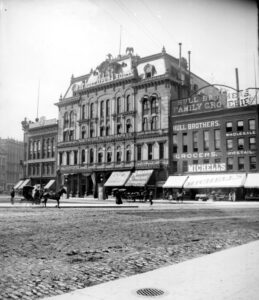
Detroit’s first public motion picture screening takes place at the earlier Detroit Opera House on Campus Martius — a fitting prelude to the long entertainment history that would later continue in the present-day building.
1906
Detroit’s first proper movie theater, The Casino, opens on Monroe Ave., helping launch a new era of film exhibition in the city and establishing John H. Kunsky as a major force in Detroit theater development.
1917
Kunsky expands his growing theater empire near Grand Circus Park with the Adams and Madison theaters, designed by Detroit architect C. Howard Crane, and helping shift Detroit’s entertainment center toward the district that would soon include the Capitol Theatre.
Jan. 12, 1922
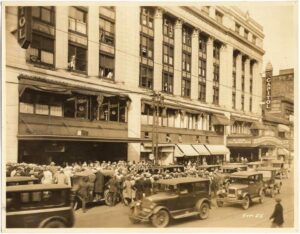
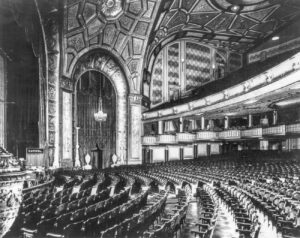
The building opens as the Capitol Theatre, Detroit’s first true movie palace. Also designed by Crane and inspired by the great opera houses of Europe, it features crystal chandeliers, a grand marble staircase, murals, box seating, and remarkable acoustics. Opening night is a citywide event.
1922–1926
The Capitol becomes a major destination for first-run films and live music. The Capitol Wonder Orchestra performs regularly, Sunday afternoon concerts earn the nickname “the poor man’s orchestra,” and an underground tunnel links the theater to the Madison across the street.
Late 1920s
The Capitol stands at the center of a thriving entertainment district near Grand Circus Park, surrounded by bright marquees, shopping, and streetcar traffic. Crane, now a leading theater architect in the nation, also designed the State (now Filmore) and the Fox which stand at the north end of the district.
1928
The theater installs sound equipment for its first “talkie,” marking the transition from silent film to sound.
1929
Kunsky and George W. Trendle sell their theater interests to Paramount-Publix. Soon after, the Capitol is renamed The Paramount.
1932
Under the pressures of the Great Depression and Paramount’s financial instability, the theater closes and sits idle for more than a year.
1934
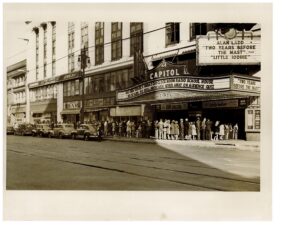
The theater reopens under a new name: the Broadway-Capitol Theatre. This name lasts for the next 26 years, spanning the Depression, World War II, and the postwar decades. The Capitol Theatre hosted opera from the late 1920s to mid 1930s–a foreshadowing of the future!
1940s
The Broadway-Capitol serves filmgoers during the war years and becomes home to the popular WXYZ radio program “Radio Schoolhouse,” which draws large Sunday crowds.
Late 1940s–1950s
The theater becomes an important venue for live jazz, rhythm and blues, and popular entertainment. Artists including Duke Ellington, Dinah Washington, Louis Armstrong, Lionel Hampton, and others appear there. In 1954, Bill Haley & The Comets play Detroit’s first rock ’n’ roll show at the theater.
1956
The theater hosts a number of notable premieres and genre films, reflecting the changing tastes of movie audiences and the increasingly eclectic programming of the era. Clayton Moore, the Lone Ranger, makes a personal appearance in 1958.
1960
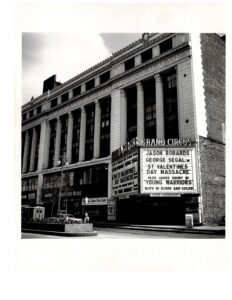
After another renovation, the theater reopens with a new identity: the Grand Circus Theatre. Upgrades include widescreen projection, fewer seats, wider aisles, redesigned interiors, and a bold new marquee.
1964
The Grand Circus hosts Detroit’s first international film festival, another major first in the building’s long cultural life. The theater also premieres the film “McHales Navy” and many Hollywood films.
Late 1960s–1970s
As more Detroiters move to the suburbs and the movie business follows them, downtown theaters struggle. The Grand Circus turns to horror, kung-fu, Blaxploitation, and soft-core films in order to survive. By the late 1970s, large portions of the theater are closed off.
Oct. 28, 1978
The Grand Circus Theatre shows its final movies and closes.
1981
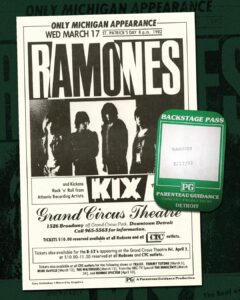
The building reopens again — this time as Grand Circus Live, a rock venue. Its first major event is a 50-hour Rock-a-thon featuring 40 local bands. The venue hosted acts including Grace Jones, the Eurythmics, The Clash, Cyndi Lauper, the Violent Femmes, R.E.M., the B-52s, U2, and many others.
1982
The venue hosts the first MetroTimes Detroit Music Awards ceremony and concert.
1985
A fire leads to the theater’s closure. In the years that follow, neglect, theft, and weather damage leave the building in devastating condition.
1988
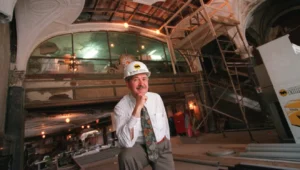
David DiChiera, general director of Michigan Opera Theatre, tours the ruined building and sees not a lost cause, but a future home for opera in Detroit.
1989-1990
Michigan Opera Theatre officially takes possession of the building, beginning the long process of stabilization, fundraising, and restoration. In 1990 it is announced MOT’s future home will be called the Detroit Opera House and Philip E. Benton Jr., then president of Ford Motor Company, agrees to chair the capital campaign. Lead donors are the Kresge Foundation, Chrysler, Ford, General Motors, the Skillman Foundation and the Knight Foundation.
1991
DiChiera tours Luciano Pavarotti through the ruinous theater. A press conference is held with Pavarotti prior to his MOT concert performance at Joe Louis Arena where he promises to return to Detroit for the grand opening of the Detroit Opera House.
June 21, 1993 – 1994
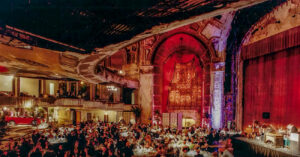
Groundbreaking begins on the major renovation and transformation of the building into the Detroit Opera House. The adjacent Robert Furs Building is demolished to make way for an expanded stage house, which will become the largest in the state. A 1994 opera ball is held in the dilapidated auditorium giving attendees the opportunity to see the space and to encourage support for the vision for Detroit’s own opera house. The project restores historic details while adding the stage house, backstage support, and technical capacity needed for large-scale opera.
April 21, 1996
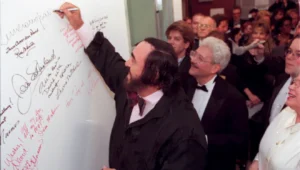
The building officially reopens as the Detroit Opera House, with a gala concert featuring Luciano Pavarotti, who had promised David DiChiera he would return to open it. Dame Joan Sutherland is an honorary guest and cuts the red ribbon on the stage proclaiming the opera house is “open and ready for music.” The evening includes performances by fifteen singers, including Pavarotti, three conductors, and features Roddy McDowall and Ron Raines as co -Master of Ceremonies MOT’s Orchestra, Chorus and the Rackham Symphony Choir all perform.
Spring 1996
MOT presents, as its first large-scale opera in its new home, Puccini’s La bohème, starring Marcello Geordani. The opening season also includes Maria Ewing as Salome Summer of 1996, MOT education director Karen VanderKloot DiChiera mounts summer youth programs at the theater – Learning at the Opera House.
1997
The newly reopened Opera House begins its first Season of Dance, inaugurated by the American Ballet Theatre. The same year also brings Michigan Opera Theatre’s first Wagner opera in the house, The Flying Dutchman.
1998
The Opera House continues to establish itself as a major destination for both opera and dance, with Michigan Opera Theatre’s first staging of Massenet’s Manon and a visit from Les Ballets de Monte Carlo, including an appearance by Princess Caroline of Monaco.
1999
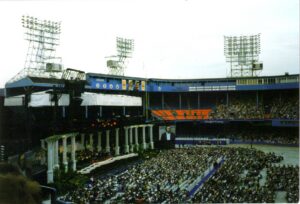
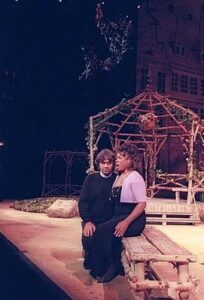
A landmark year: Michigan Opera Theatre presents The Three Tenors at Tiger Stadium in the trio’s only North American appearance of that year, and Andrea Bocelli makes his North American opera debut at the Opera House in Werther, co-starring Denyce Graves. It is the first American production to be webcast.
2004
Growth continues beyond the stage itself: completion of the Crowning Achievement Campaign allows Michigan Opera Theatre to begin constructing the Detroit Opera House Parking Center and an adjacent six-story office tower.
2005
The Opera House produces its first world premiere: Richard Danielpour and Toni Morrison’s Margaret Garner, starring Denyce Graves.
2006
The Ford Center for Arts & Learning opens, creating more space for Michigan Opera Theatre’s education, community, and dance programming.
2007
2009–2010
During the economic downturn, Michigan Opera Theatre continues producing work through a period of cutbacks, presenting Nabucco in 2009 and reducing its opera schedule from five productions to four in 2010 as it rides out the recession.
2011
Michigan Opera Theatre marks its 40th anniversary season.
2012
The company presents its first Baroque opera, Handel’s Julius Caesar, and welcomes New York City Ballet MOVES.
2013–2014
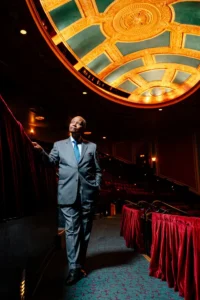
A leadership transition begins as founder David DiChiera prepares to retire as the company’s only general director and Wayne S. Brown becomes President and CEO. DiChiera stays on as artistic director. Soon after, Michigan Opera Theatre restores its six-opera season after years of reduced schedules following the recession.
2015
Michigan Opera Theatre expands its civic and curatorial reach with the Midwest premiere of Robert Xavier Rodriguez’s Frida, timed with the Detroit Institute of Arts exhibition on Frida Kahlo and Diego Rivera, and with Weinberg’s The Passenger, supported by 55 community partners.
2017
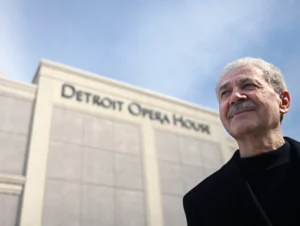
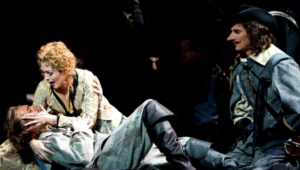
David DiChiera’s legacy is formally honored when the company announces that its home will be named the Detroit Opera House—The David DiChiera Center for the Performing Arts. A grand Salute concert includes performances by Ron Raines, Stephen Powell, Russell Thomas, Leona Mitchell, Irina Mishura, Denyce Graves, Christine Goerke and tributes from George Shirley, Martina Arroyo, Mayor Mike Duggan and Senator Carl Levin. Cyrano is remounted in May.
2018
Michigan Opera Theatre continues to push outward with contemporary work and citywide partnerships, including The Summer King, developed in connection with organizations such as the Detroit Tigers, the Charles H. Wright Museum of African American History, and the Detroit Public Library. DiChiera passes away September 18, 2018 and a public memorial is held on the opera house stage.
2019
Jon Teeuwissen follows Carol Halsted as Artistic Advisor for Dance, continuing to strengthen the company’s dance profile within the Opera House and beyond.
2020

A new chapter begins when Yuval Sharon joins as Artistic Director. The same year, MOT presents Sharon’s Twilight: Gods, a drive-through adaptation of Wagner’s Götterdämmerung staged in the Detroit Opera House Parking Center, adapting to the opportunity to present a Covid-safe production.
2021
As live performance cautiously returns, Detroit Opera embraces site-specific work outside the house: Cavalleria Rusticana at Meadow Brook Amphitheatre, Blue at the Aretha Franklin Amphitheatre, and Sharon’s BLISS at the Michigan Building Theatre.
2022
The company officially changes its name from Michigan Opera Theatre to Detroit Opera, signaling a deeper identification with the city and aligning with the theater’s name the Detroit Opera House. Roberto Kalb is appointed Music Director. Detroit Opera also presents the world premiere of a new co-production of Anthony Davis and Thulani Davis’s X: The Life and Times of Malcolm X, and Yuval Sharon’s La bohème, staged with Puccini’s four acts in reverse order.
2023
Detroit Opera continues to broaden its artistic lens with its first Spanish-language opera, Ainadamar, on its stage and a new Madame Butterfly created with a fully Japanese and Japanese-American creative team. Wayne S. Brown announces his retirement, and the company names Patty Isacson Sabee as its next President and CEO.
Jan. 2, 2024
Patty Isacson Sabee begins her tenure as President and CEO, becoming only the third person to lead Detroit Opera since the company’s founding in 1971.
2025–26
Detroit Opera’s current season frames opera around the question “Has America at 250 lived up to its promise?” The season includes Highways and Valleys – Two American Love Stories, The Handmaid’s Tale, and the production premiere of John Cage’s Apartment House 1776, staged inside the galleries of Cranbrook Art Museum.
RELATED POSTS
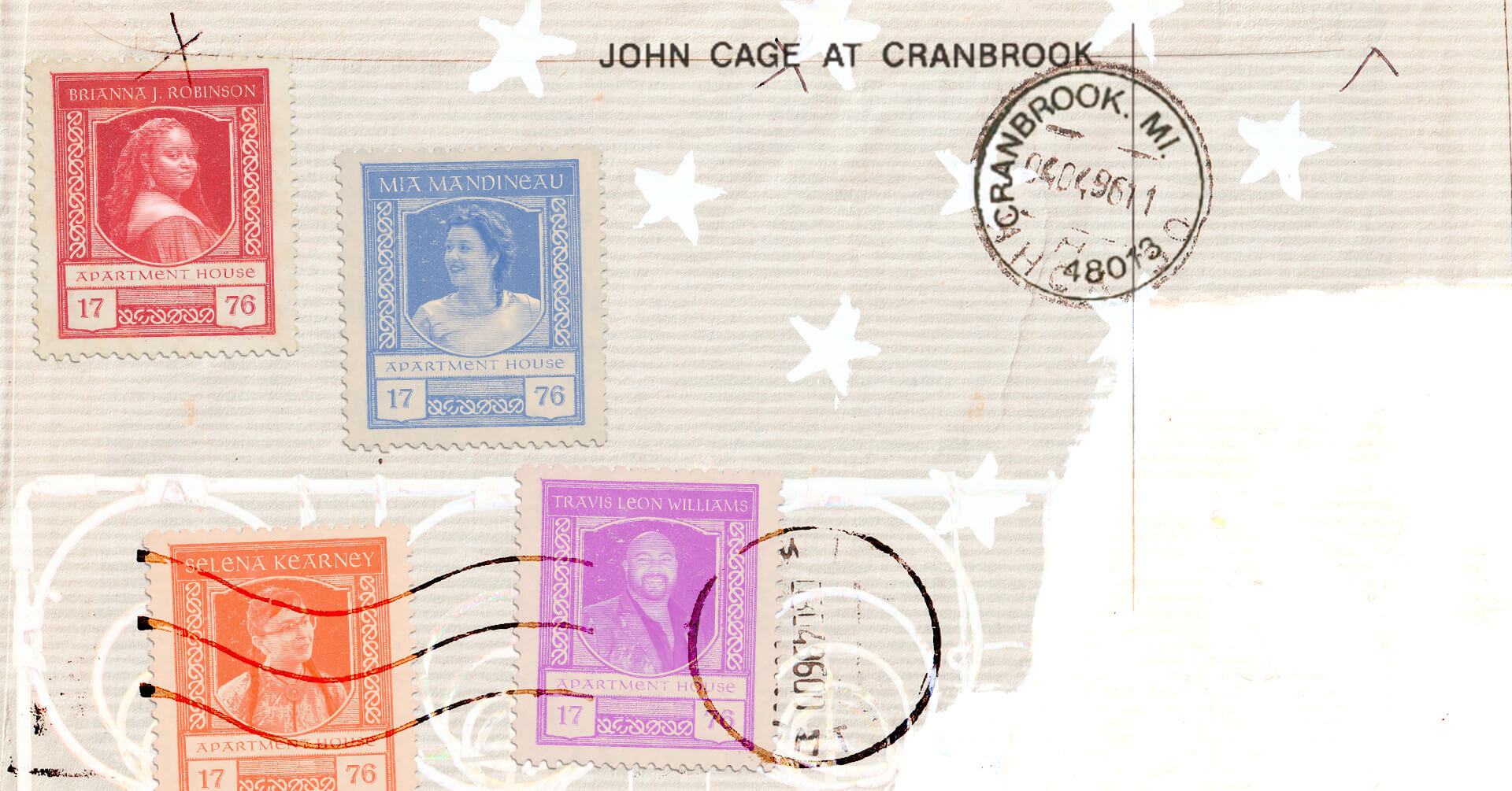
What Is an Apartment House of Sound?
What Is an Apartment House of Sound? John Cage’s America as Overlapping Rooms What does it mean to hear a nation not as a single story, but as an architecture of coexistence? By Austin T. Richey, Ph. D. Digital Media Manager and Storyteller, Detroit Opera John Cage in his apartment, photo by Roberto Masotti (1979)...
learn More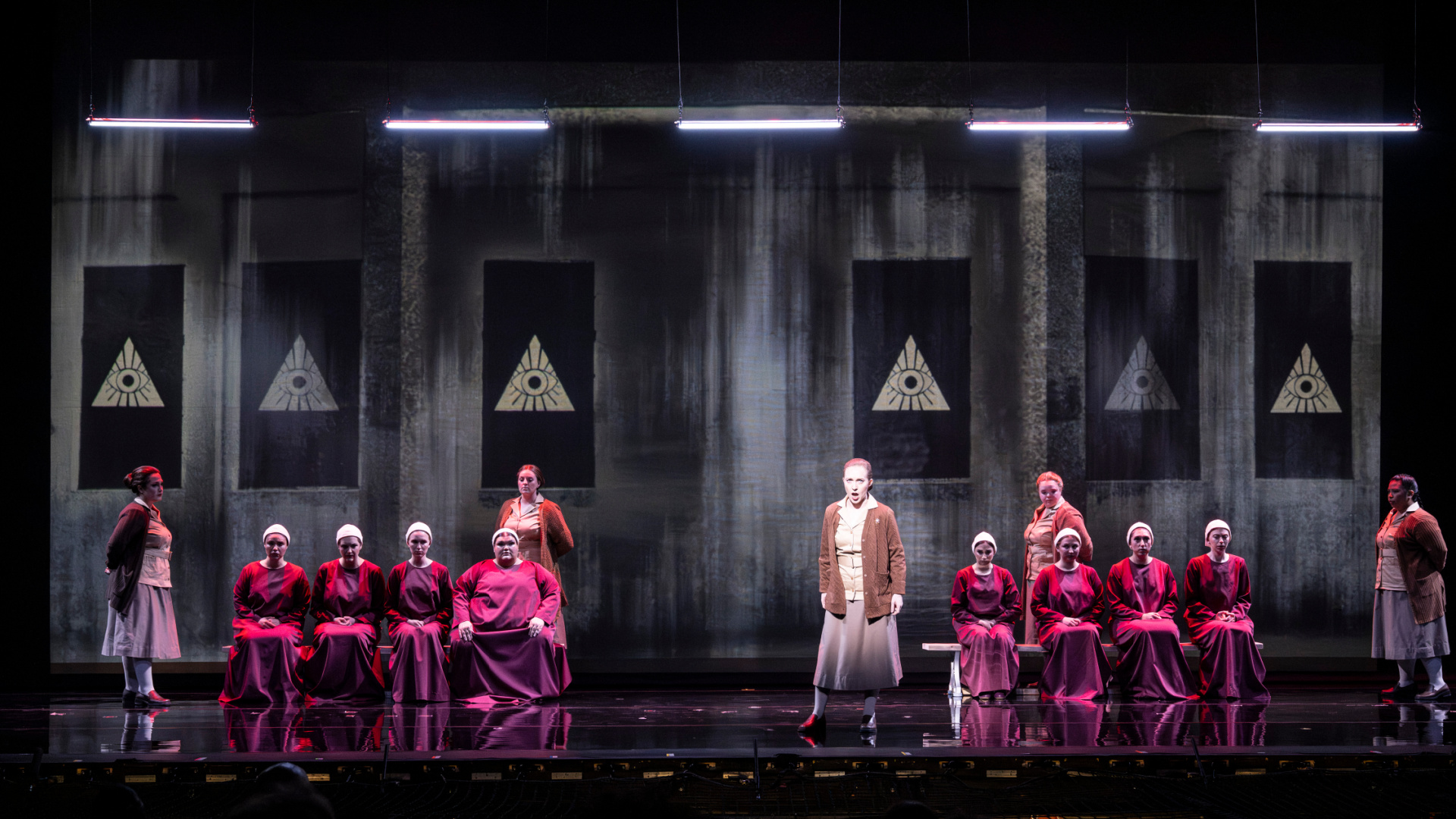
Opera, Pop Culture, and Why The Handmaid’s Tale Already Has a Fandom
Opera, Pop Culture, and Why The Handmaid’s Tale Already Has a Fandom By Austin T. Richey, Ph. D. Digital Media Manager and Storyteller, Detroit Opera Women dressed in red gowns protest outside the Department of Homeland Security Cybersecurity Summit in Manhattan, New York, July 31, 2018. Shannon Stapleton / Reuters. Long before a single note of The Handmaid’s Tale is...
learn More
John Cage’s Detroit: Sounds of Silence
John Cage’s Detroit: Sounds of Silence By Austin T. Richey, Ph. D. Digital Media Manager and Storyteller, Detroit Opera The 1950s saw Cage toying with the very foundational ideas of composition. After receiving a copy of the I-Ching—a classic Chinese divination tool—from a pupil, Cage began employing the text to elicit chance procedures in his...
learn More