What Is an Apartment House of Sound? John Cage’s America as Overlapping Rooms
What does it mean to hear a nation not as a single story, but as an architecture of coexistence?
By Austin T. Richey, Ph. D.
Digital Media Manager and Storyteller, Detroit Opera
When Detroit Opera presents John Cage’s Apartment House 1776 at Cranbrook Art Museum, audiences are invited into a very different kind of operatic experience. This is not opera arranged around a single stage, a fixed point of view, or one continuous line of dramatic action. Instead, it is a work built out of simultaneity: overlapping sounds, shifting proximities, and voices encountered in motion. Listening becomes less about sitting still and receiving a finished object than about moving through space and discovering how one sound changes another.
Cage’s title is one of his most evocative ideas. An apartment house is not a monument. It is not a palace, and it is certainly not a cathedral of perfect order. It is a shared structure made up of separate rooms, thin walls, adjoining lives, and partial overhearings. Someone sings down the hall. A radio hums in another room. A conversation drifts through a doorway.
Nothing is fully isolated, and nothing belongs entirely to one listener. That, for Cage, becomes both a social image and a musical one: a way of imagining America not as a single voice, but as a building full of adjacent voices.
In Apartment House 1776, that metaphor becomes form. Cage created the work for the American bicentennial in 1976, but he did not respond to that moment with a grand patriotic pageant or a polished historical tableau.

He made something stranger, looser, and ultimately more revealing: a piece in which different materials and traditions occupy the same acoustic world without being forced into neat agreement. The result is not consensus. It is coexistence.
Opera Without a Single Center
Opera has always been fascinated by the pressure of multiple voices existing at once. In Mozart’s ensembles, characters sing conflicting truths simultaneously and the music holds them together without erasing their differences. Verdi used the chorus to bring his character’s private feelings into contact with public life. Wagner built orchestral textures in which layers of meaning unfold at the same time, one idea pressing against another.
Mozart – Cosi fan tutte: I. “Di scrivermi,” Orchestra of the Age of Enlightenment directed by Iván Fischer (2006)
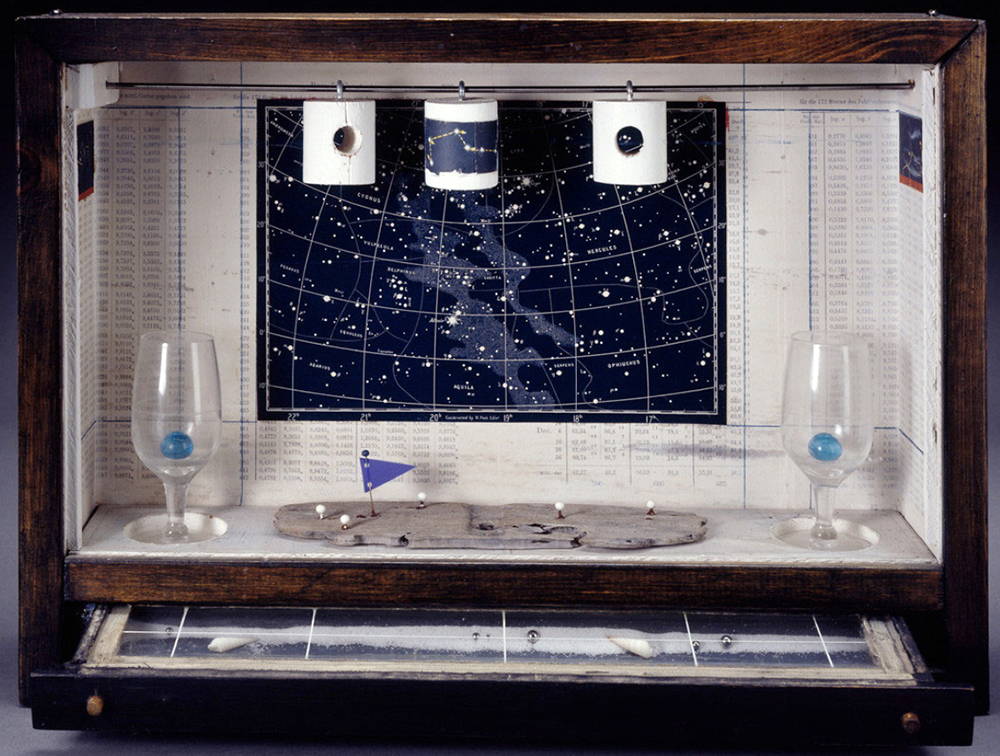
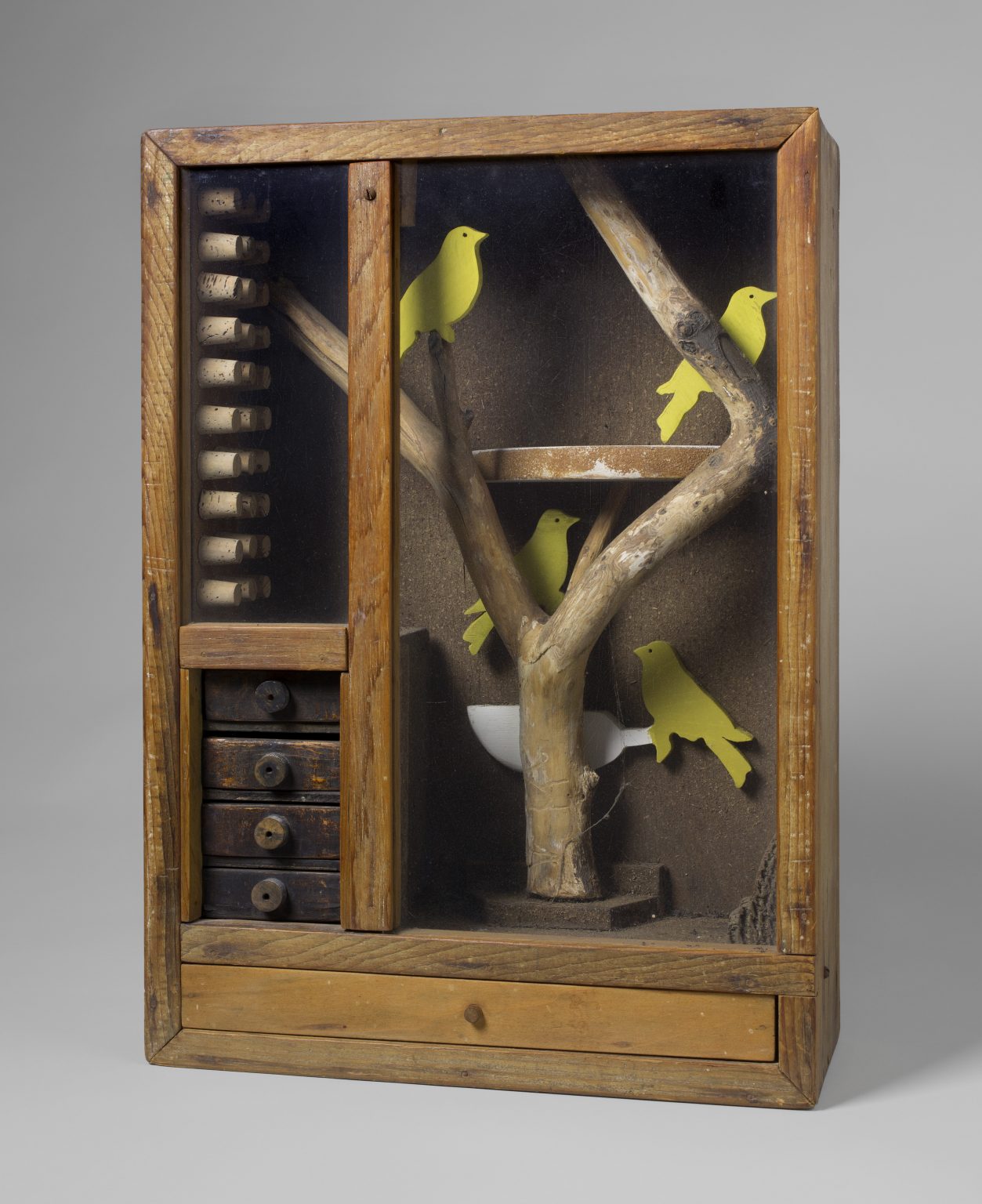
Cage removes opera’s traditional center of gravity. There is no single privileged perspective here, no stable front-facing arrangement in which the audience is guided toward the correct focal point. In that sense, Apartment House 1776 has something in common with a Cubist painting: multiple viewpoints coexist, and the work asks us to hold them in relation rather than flatten them into a single image. One might also think of Joseph Cornell’s box constructions, where separate objects inhabit a shared frame without dissolving into one another. Cage’s piece works similarly, but with sound and space as its materials.
This is part of why the museum setting matters so much. At Cranbrook Art Museum, the work can unfold as an environment rather than a conventional event. Museums encourage a different kind of attention. You move. You pause. You compare. You return. You notice one thing at a distance, then another up close. That rhythm of wandering is deeply compatible with Cage’s art. The listener becomes less like a seated observer and more like a temporary resident moving through a structure of sounds.
Cage’s broader aesthetic often embraced this kind of openness. In his so-called “musicircus” works, multiple performances can take place at once without being synchronized to a single master pulse.
Scenes from Yuval Sharon’s production of Europeras 1 & 2, The Industry (2018)
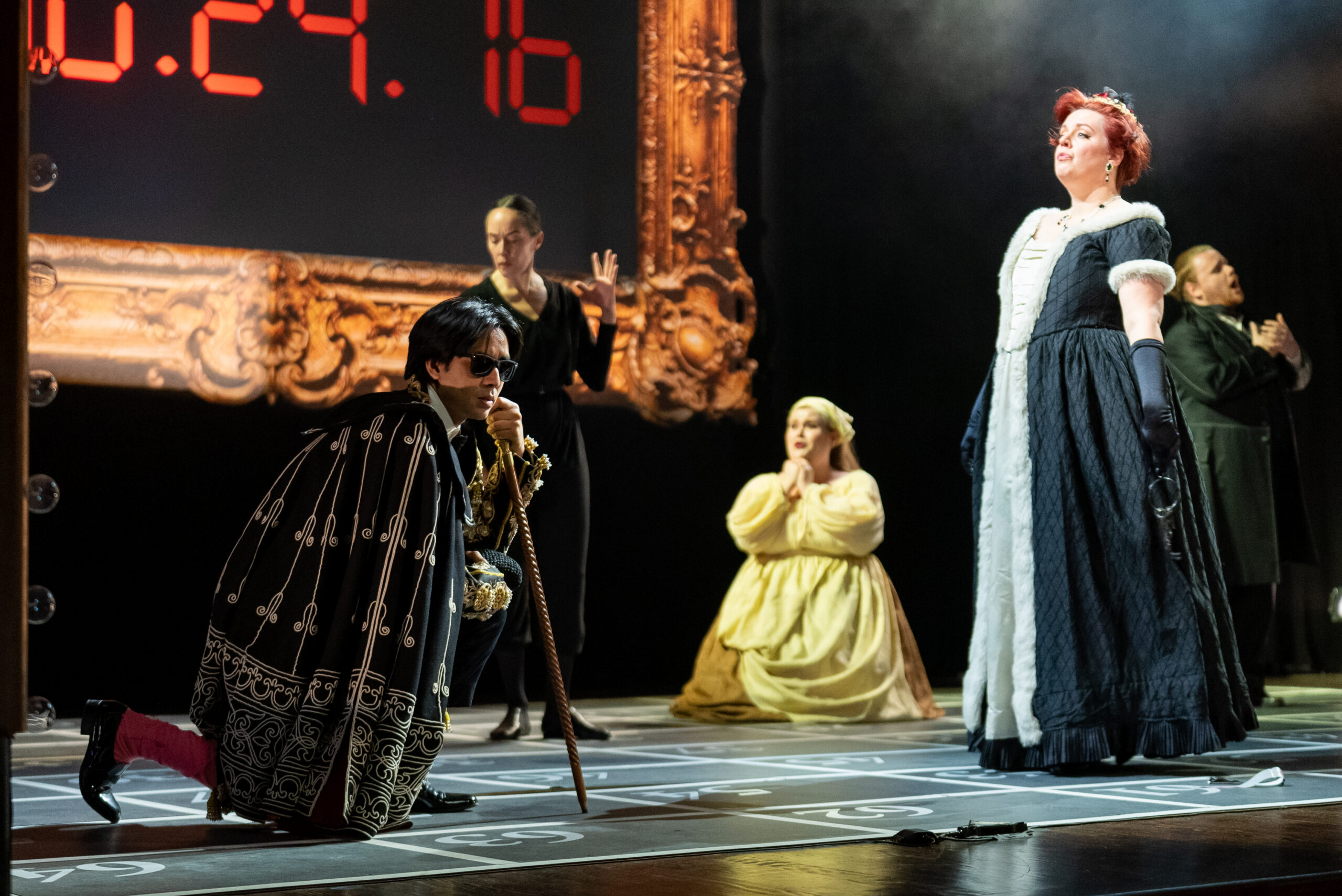
Apartment House 1776 does not ask every element to align perfectly. It allows sounds to coexist in a shared field, sometimes brushing against one another, sometimes receding, sometimes coming unexpectedly into focus. The drama lies in relation, not in control.
America Heard Sideways

Cage’s title also offers a sharp way of thinking about American history. So much music about the United States has shaped the narrative as clear anthem, the singular declaration, the broad and spacious national voice. There is a powerful version of that tradition running through works such as Copland’s and Bernstein’s, and even earlier through the grand rhetoric of patriotic hymnody.
Old American Songs – Set I: No. 2, The Dodger “Campaign Song,” Aaron Copland (1951)
West Side Story: Act I: “America,” Leonard Bernstein (1957)
But Cage is drawn to a different America—less settled, less centered, less certain of itself.
That does not make Apartment House 1776 anti-historical. Quite the opposite. It is a work deeply concerned with how history sounds, and with the fact that history is rarely experienced as one clean narrative. In Cage’s hands, 1776 is not just a founding date or a triumphal emblem. It becomes a cluster of overlapping inheritances, contradictions, and unresolved presences. The nation is heard not as one perfectly tuned chorus, but as adjacent rooms filled with memory, ritual, friction, silence, and echo.
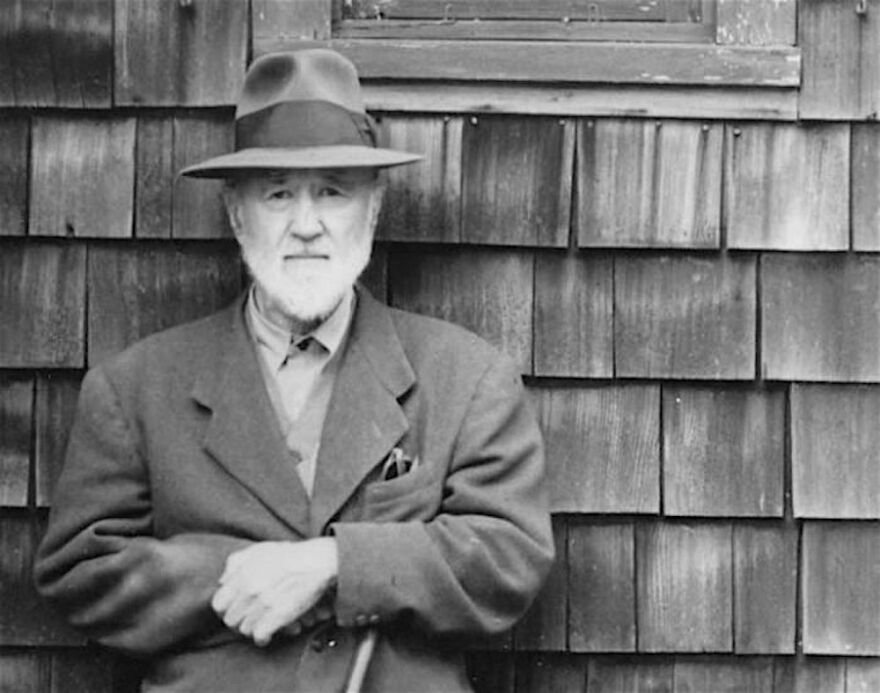
There is an important musical parallel here in Charles Ives, another American composer who understood that simultaneity can be more truthful than polish. Ives famously let marching bands, hymns, parlor songs, and overlapping tonalities collide, creating a sonic world in which American life sounded gloriously cluttered and unstable.
3 Places in New England: II. “Putnam’s Camp, Redding, Connecticut,” Charles Ives (c. 1903-1914)
Cage shares some of that instinct for collage, but his temperament is different. Where Ives can feel exuberant and thick with quotation, Cage is often more spacious, more patient, more attuned to fragility and contingency. He is less interested in declaring what America is than in creating the conditions under which its many parts can remain audible.
Listening as Discovery
One of the most radical things about Apartment House 1776 is that no listener can ever grasp the whole of it at once. You hear one strand clearly while another slips away. You turn a corner and the acoustic balance changes. Someone standing 20 feet from you may come away with a distinctly different experience. In a conventional opera house, that might be seen as a problem. Here, it is central to the work’s meaning.
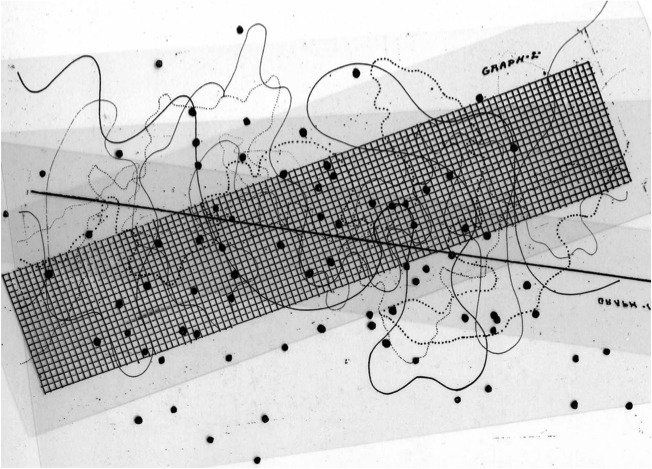
Cage asks us not to master every element, track every motif, or comprehend a single authoritative account of what happened. The point is to listen with curiosity and humility: attention without ownership.
That ethic has a visual parallel, too. In installation art, the viewer’s movement is part of the composition; meaning is not delivered all at once but accumulated through passage, juxtaposition, and duration. Cage’s music often works the same way. Space is not merely a container for sound. It is one of the things composing the experience.
Why This Work Matters Now
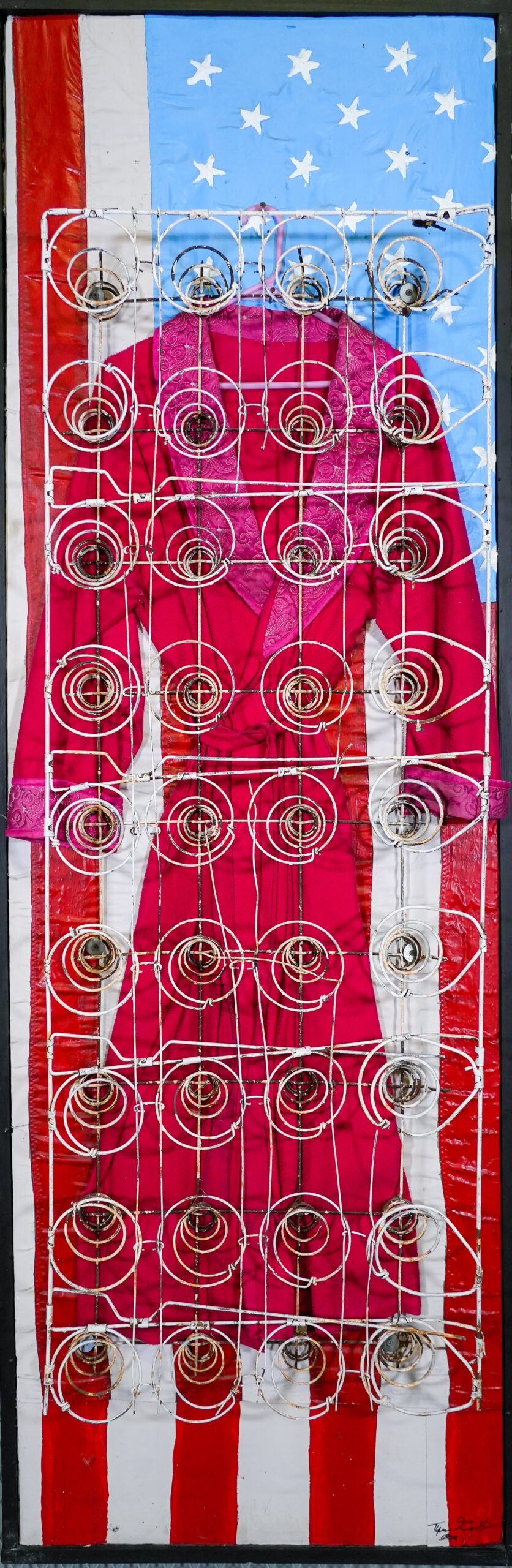
Apartment House 1776 is especially compelling in the present moment. As the United States approaches its 250th anniversary, Cage’s work feels less like a commemorative object than a provocation. What does it mean to hear a nation not as a single story, but as an architecture of coexistence? What happens when voices do not collapse into agreement? What kinds of listening become possible when hierarchy loosens and the edges of the frame begin to speak?
For Detroit Opera, the work also opens up a broader question about opera itself. What if operatic experience is not only about plot, character, and frontal spectacle? What if it can also be about immersion, encounter, distance, and the subtle drama of sounds sharing space? In Apartment House 1776, voice remains central, but it is released from many of the conventions that usually organize it. The result is theatrical, historical, and deeply musical, even as it resists the usual markers of operatic order.
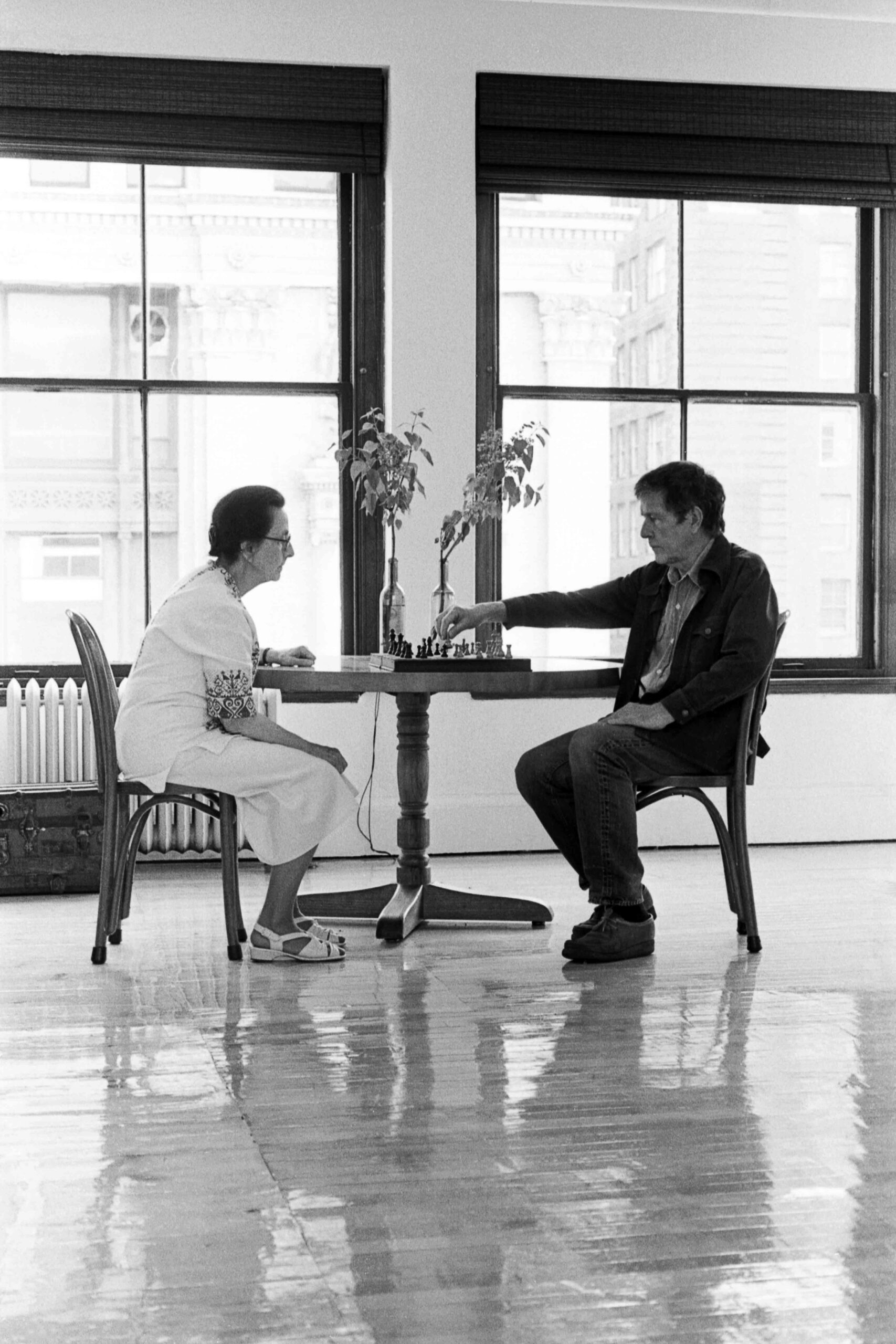
An apartment house of sound is not tidy. It is porous, layered, unfinished, and shared. That is exactly what gives it life. Rather than asking everyone to sing the same tune, Cage asks whether we can hear one another across rooms.
And in that question, Apartment House 1776 still sounds startlingly current.
RELATED POSTS
John Cage’s Detroit: Early Years
John Cage’s Detroit: Early Years By Austin T. Richey, Ph. D. Digital Media Manager and Storyteller, Detroit Opera John Cage during his 1966 concert at the opening of the National Arts Foundation in Washington, D.C. Image: Rowland Scherman / Getty Images. “The first question I ask myself when something doesn’t seem to be beautiful is...
learn More
A Timeline of the Detroit Opera House
A Timeline of the Detroit Opera House By Austin T. Richey, Ph. D. Digital Media Manager and Storyteller, Detroit Opera 1896 The Detroit Opera House c. 1896. Burton Historical Collection. Detroit’s first public motion picture screening takes place at the earlier Detroit Opera House on Campus Martius — a fitting prelude to the long entertainment...
learn More
Detroit Opera Goes to Church
Detroit Opera Goes to Church Arias, Spirituals, and Sacred Choral works Detroit Opera in collaboration with Hartford Memorial Baptist Church will present a program of Arias, Spirituals, and Sacred Choral works. Featuring the Detroit Opera Resident Artists, Hartford Memorial Baptist Church Jubilee and Cathedral Choirs, and Detroit’s own Alvin Waddles, Minister of Music. Free and...
learn More